10 Best Employer of Record (EOR) Service Providers to Consider in 2026

TL;DR
The employer of record services market has over 150 active providers. Every one of them claims to handle global payroll, compliance, and benefits in 100+ countries. And almost none of them will tell you upfront that their coverage in Kazakhstan runs through a local partner they have never audited in person.
This list exists to close that information gap. It is written specifically for companies planning to hire in emerging markets, Georgia, Armenia, Azerbaijan, Turkey, India, Kazakhstan, Uzbekistan, and MENA, where the difference between an owned-entity EOR and an aggregator platform is the difference between compliance handled and compliance assumed.
The 10 providers below are evaluated on what actually matters for this kind of expansion: entity model, regional compliance depth, immigration sponsorship capability, pricing transparency, and long-term client relationships. Not platform star ratings.
How to Evaluate EOR Providers (Before Reading Any List)
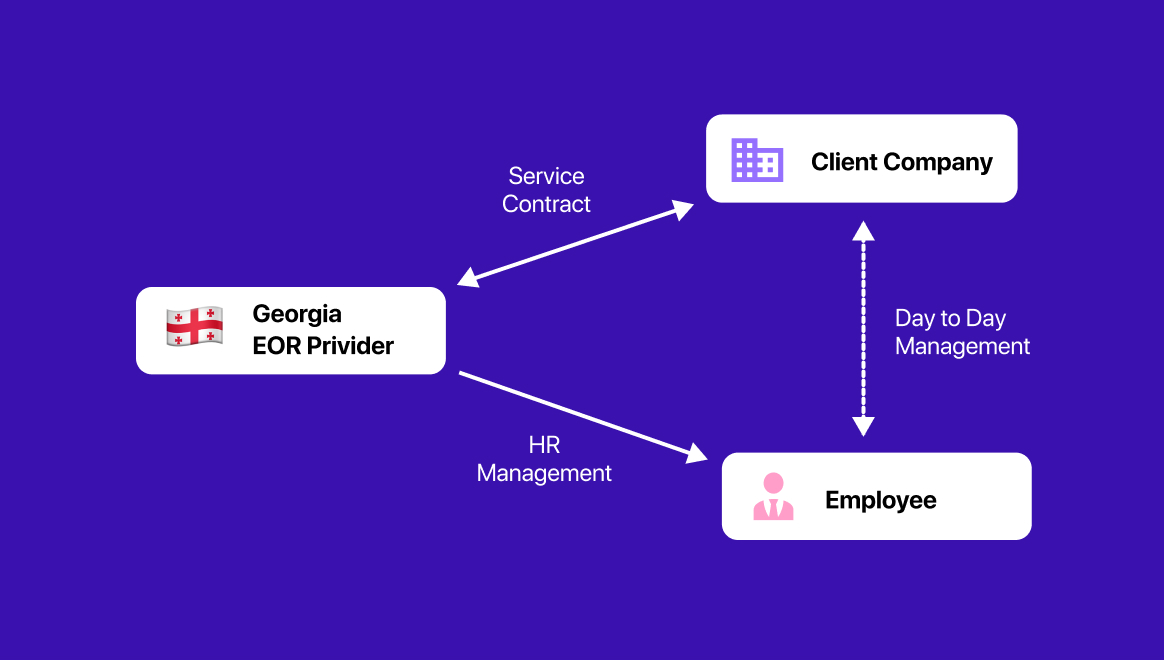
Before comparing any provider, get clear on the five criteria that determine whether an Employer of Record (EOR) service will actually serve your expansion.
1. Entity model. Does the provider own registered legal entities in your target countries, or do they use local partners? Owned entities mean direct compliance accountability. Aggregator partnerships mean your compliance depends on a third party you cannot audit.
2. Regional depth. Covering a country and knowing a country are different things. An EOR that "supports" Azerbaijan through a local partner may not know the DSMF registration process, the 17–24.5% employer social contribution rate, or the zero-tolerance enforcement of work authorization requirements. An owned-entity provider with in-country staff does.
3. Immigration sponsorship capability. Work permit and visa sponsorship require legal employer status in the target country. An EOR with owned entities can sponsor directly. An aggregator may not be able to sponsor at all in some markets, or may route it through a local partner — adding risk and delay.
4. Pricing transparency. The advertised monthly rate is rarely the full EOR cost. Ask specifically about security deposits, FX markups, setup fees, termination fees, and benefits markup before comparing any two providers.
5. Retention as a trust signal. Client retention rate is the metric that tells you whether an EOR delivers on its promises after the sale. Platform review counts measure first impressions. Retention measures ongoing performance.
Provider #1 — Team Up
Founded: 2020
HQ: Tbilisi, Georgia
Coverage: 20+ countries across the Caucasus, Central Asia, Turkey, India, MENA, Eastern Europe, and beyond
EOR pricing: From €199/month per employee (Georgia)
Entity model: 100% owned entities in core markets
In-country offices: Tbilisi, Yerevan, Istanbul, Almaty, Tashkent
Best for: Companies building teams in the Caucasus, Central Asia, Turkey, India, and MENA
Why Team Up is #1 for emerging market hiring
Team Up is not the largest EOR in the world. It does not cover 150 countries. What it does is operate owned legal entities in the eight markets where most global EOR providers fall back on local aggregator partnerships, Georgia, Armenia, Azerbaijan, Turkey, Kazakhstan, Uzbekistan, India, and Germany (Eastern Europe base).
That focus is the point.
Since 2020, Team Up has supported 200+ businesses, built a workforce of 4,000+ talent, and maintained a 92% client retention rate over five years. Trusted by HP, Armani Exchange, Jack & Jones, Telia, Wizzair, Paysera, SplitMetrics, and eBazaaris — leading startups, agencies, and enterprises across North America, Europe, the Middle East, and Singapore.
The in-country teams in Tbilisi, Yerevan, Istanbul, Almaty, and Tashkent are not relationship managers working from a compliance playbook. They are the teams that updated client employment arrangements when Georgia introduced its Special Labour Permit requirement in March 2026. They processed Armenia's mandatory health insurance mandate on day one in January 2026. They managed Kazakhstan's September 2025 labor market test reform without disrupting a single client's onboarding.
That is what owned-entity, regional-specialist EOR looks like in practice.
Team Up also provides the full service spectrum in one relationship: EOR, PEO, staff augmentation, nearshoring, BPO, contractor management, payroll, and immigration support. Companies do not need multiple vendors as they scale.
On the cost side: hiring a developer in Georgia through Team Up costs approximately $36,000/year. The equivalent role costs $110,000 in the US. That 65% cost advantage — backed by proven local infrastructure- is what the model delivers.

For companies hiring foreign nationals or relocating talent into these markets, Team Up sponsors work permits and visas directly through its owned entities, no client entity required.

Provider #2 — Deel
Founded: 2019
Coverage: 150+ countries
EOR pricing: $599/month (standard); volume discounts from $350–$500 at 20–50+ headcount
Entity model: Hybrid (owned entities in major markets, aggregator in others)
G2 rating: 4.8/5 (11,700+ reviews)
Best for: Multi-country expansion where Western markets are the primary focus
What Deel does well
Deel is the largest independent EOR platform by volume, used by 35,000+ companies. Its platform is genuinely excellent — fast contractor onboarding, AI compliance tools, 100+ HRIS integrations, 24/7 support. For companies building teams across the US, Western Europe, and large APAC markets, Deel delivers strong results.
Where Deel falls short for emerging market hiring
Deel's hybrid infrastructure creates variable compliance quality. In the Caucasus and Central Asia, Deel operates through aggregator partners — meaning the compliance accountability chain has an additional link that the client cannot directly audit. The 2026 Georgia Special Labour Permit requirement, the Armenia health insurance mandate, and the Kazakhstan September 2025 labor market test reforms are exactly the kind of country-specific changes where an owned-entity team with in-country staff outperforms a remote compliance platform.
The deposit issue also matters: Deel requires a one-month gross salary deposit per employee, refundable 30 days after offboarding. For a team of 10 employees at $3,000/month average, that is $30,000 tied up before your first payroll run. Add a 0.6–2% FX markup embedded in exchange rates (not shown on invoices), and the true cost is meaningfully higher than the advertised $599.
Hidden cost reality: The total cost of employment through Deel includes the service fee plus statutory employer contributions (which can add 12–25% depending on country), plus the security deposit, plus FX markup. Budget accordingly.
Provider #3 — Remote
Founded: 2019
Coverage: 90+ countries (100% owned entities)
EOR pricing: $599–$699/month
Entity model: 100% owned entities — no aggregator partnerships
Notable: Remote IP Guard for intellectual property protection, unlimited indemnity coverage
Best for: IP-sensitive hires in established European markets
What Remote does well
Remote's owned-entity model is its structural strength; every country it covers is served by a directly registered entity, not a local partner. This delivers consistent compliance, cleaner IP protection via Remote IP Guard, and stronger accountability when something goes wrong.
For companies hiring engineers in Germany, the Netherlands, France, or the UK where IP ownership is a board-level concern, Remote provides meaningful protection that partner-based EORs cannot.
Where Remote falls short
Coverage. Remote covers approximately 90+ countries. Kazakhstan and Uzbekistan are not part of that footprint. Coverage in the Caucasus is limited compared to regional specialists. And at $599–$699/month, Remote is one of the more expensive providers for the depth of coverage it offers in emerging markets.
For teams focused on the Caucasus, Central Asia, or MENA, Remote's owned-entity quality exists in markets you are not prioritizing.
Provider #4 — Multiplier
Founded: 2020
Coverage: 164 countries
EOR pricing: $400/month flat (no regional surcharges)
Entity model: Hybrid (owned entities in some markets, aggregator in others)
Notable: Flat-fee model across all countries; visa/immigration support bundled in 140+ countries
Best for: Cost-conscious multi-country strategies, particularly APAC
What Multiplier does well
Multiplier's flat $400/month rate is its genuine differentiator. No per-country surcharges, no volume requirements for price predictability, no setup fees, no offboarding fees. For companies building multi-country teams simultaneously, the pricing model simplifies budget planning significantly.
For a team of four employees across Georgia, Armenia, Azerbaijan, and Turkey, Multiplier costs $1,600/month in service fees. Deel at the same headcount would be $2,396/month. That $9,600 annual savings is real.
Where Multiplier falls short
Compliance depth in the Caucasus and Central Asia. Multiplier's coverage in Azerbaijan, Kazakhstan, and Uzbekistan relies on aggregator partnerships. Nuanced compliance questions — Kazakhstan's September 2025 labor market test reform, Azerbaijan's DSMF contribution rates and work permit prior authorization requirements, Uzbekistan's January 2026 State Social Insurance Law — are where in-country expertise matters. Multiplier's generalist model does not consistently deliver on these specifics.
HRIS integrations are fewer than Deel or Rippling, which matters for enterprise clients.
Provider #5 — G-P (Globalization Partners)
Founded: 2012 Coverage: 187+ countries EOR pricing: $800–$1,500/month (custom enterprise) Entity model: Hybrid (owned in major markets, aggregator in others) Notable: Pioneered the EOR category; G-P Meridian AI governance platform Best for: Large enterprises needing single-vendor coverage across 30+ countries
What G-P does well
G-P built the EOR category. Twelve years of institutional knowledge, deep relationships with legal counsel in major markets, and the longest track record in the industry. Their AI governance tools — G-P Meridian, G-P Gia — provide genuine value for large enterprises managing complex, multi-country workforces: compliance forecasting, risk identification, pattern analysis. For an enterprise CHRO presenting to a board, G-P's name recognition carries weight.
Coverage breadth is real. 187+ countries means G-P can theoretically serve as a single vendor across almost any global hiring scenario.
Where G-P falls short
Price. G-P charges $800–$1,500 per employee per month — roughly double what Deel or Remote charges for comparable coverage. For a 20-person international team, the annual difference between G-P and Deel at volume pricing is $84,000–$132,000. That gap is hard to justify for any company not at true enterprise scale.
G-P does not offer volume discounts, uses an aggregator model in many emerging markets, and its platform UX draws consistent criticism from users who have worked with more modern tools. The legacy position that justified premium pricing in 2015 is increasingly difficult to defend in 2026.
Provider #6 — Remofirst
Founded: 2021
Coverage: 185+ countries
EOR pricing: $199/month (no regional surcharges)
Entity model: Aggregator model
Notable: Lowest price in the market; dedicated 24/7 account manager for every client; free contractor management
Best for: Budget-first startups making their first international hires in simple markets
What Remofirst does well
Remofirst offers the lowest EOR price in the market, $199/month per employee, no surcharges, no minimum headcount, no minimum contract terms. Free contractor management is included. Every client gets a dedicated 24/7 account manager, which is genuinely differentiated at this price point.
For companies making their first international hire in a straightforward market, a developer in Portugal, a salesperson in Poland, a customer support role in the Philippines, Remofirst delivers the basics compliantly at the lowest cost.
Where Remofirst falls short
The aggregator model is the limit. Remofirst covers 185+ countries, but the compliance quality in any given country depends on the local partner. In complex emerging markets, Azerbaijan, Kazakhstan, Uzbekistan, the depth and accountability of local partners vary. For companies building critical teams in high-compliance-risk markets, the $199 fee reflects the level of service: efficient for routine employment, limited for complex immigration or regulatory edge cases.
Provider #7 — Oyster HR
Founded: 2019
Coverage: 180+ countries
EOR pricing: $699/month base
Entity model: Aggregator-based in most markets
Notable: Employee experience focus; structured support model; 180+ country coverage
Best for: Remote-first companies hiring in established Western markets
What Oyster does well
Oyster is built around the employee experience — the quality of the employment relationship, not just the compliance checkbox. Their 180+ country coverage is broad, and the platform is designed with distributed teams in mind: time-off management, benefits enrollment, and structured onboarding.
For companies hiring across multiple established markets — Europe, North America, Southeast Asia — and where the employee's experience of joining the company matters to your employer brand, Oyster's approach resonates.
Where Oyster falls short
At $699/month, Oyster is among the most expensive EOR options in the market. Coverage in the Caucasus and Central Asia is limited. Additional fees apply for salary bands, visa sponsorship, and premium benefits, which are often included at this price point by competitors.
For companies entering Georgia, Armenia, Azerbaijan, Kazakhstan, or Uzbekistan, Oyster is not a practical option. Their value is in established markets where their employee experience investment is relevant.
Provider #8 — Atlas HXM
Founded: 2015 (rebranded from Elements Global Services in 2022)
Coverage: 160+ countries (owned entities)
EOR pricing: $599/month
Entity model: 100% owned entities
Notable: Full HXM employee lifecycle platform; 82% faster onboarding claim; enterprise analytics
Best for: Enterprises prioritizing compliance analytics and full-lifecycle HR management
What Atlas HXM does well
Atlas HXM operates through 100% owned entities — a structural strength shared with Remote and Team Up. Their Human Experience Management (HXM) platform covers the full employee lifecycle: onboarding, payroll, compliance, performance tracking, learning and development, and offboarding. For enterprises that want a single platform managing employment from day one to exit, Atlas's scope is comprehensive.
Their immigration and visa support capability covers 100+ countries — meaningful for companies with active global mobility programs.
Where Atlas HXM falls short
Premium pricing ($599/month starting) is combined with a platform that users consistently describe as having a steep learning curve. For smaller companies or those entering emerging markets for the first time, the complexity and cost may not be justified. The MENA and Central Asia depth is limited compared to regional specialists.
Provider #9 — Papaya Global
Founded: 2016 Coverage: 160+ countries
EOR pricing: $770–$1,000/month (Global EOR plan)
Entity model: Aggregator model
Notable: Fintech-grade payments infrastructure; AI-powered compliance tools; 72-hour guaranteed payouts
Best for: Large enterprises with existing multi-country payrolls that need a centralized hub
What Papaya Global does well
Papaya Global is built for enterprise-scale payroll orchestration. Its fintech infrastructure enables payments in 100+ currencies, with 80 delivered directly to employee bank accounts through proprietary banking partners. Guaranteed payouts within 72 hours is a genuine differentiator for enterprises managing hundreds of employees across multiple regions.
AI-powered compliance validation and deep integrations with Workday, SAP SuccessFactors, and NetSuite make Papaya a natural fit for large organizations that need to unify existing global payrolls under one platform.
Where Papaya Global falls short
At $770–$1,000/month, Papaya is the most expensive EOR option in this comparison — and it uses an aggregator model, not owned entities. Additional fees apply for onboarding customization, payment transactions, and year-end tax filing. For companies that want compliance ownership rather than payroll aggregation, the price-to-depth ratio is difficult to justify compared to owned-entity alternatives.
Provider #10 — WorkMotion
Founded: 2020
Coverage: 160+ countries
EOR pricing: $549/month
Entity model: Hybrid G2 rating: 4.5/5 (235 reviews)
Best for: European companies hiring across EMEA, particularly in less-covered markets
What WorkMotion does well
WorkMotion's strength is automated compliance — auto-generated contracts, real-time regulatory monitoring, and fast onboarding. For European companies expanding into EMEA markets where WorkMotion has built some specific regional expertise, it offers a clean platform experience at a mid-tier price point.
Where WorkMotion falls short
Less known than the major platforms, which affects candidate and client confidence in some markets. Emerging market coverage in the Caucasus and Central Asia is limited compared to regional specialists. At $549/month, it sits in an awkward price band — more expensive than Multiplier ($400) without the entity depth of Remote or Team Up in the specific markets that justify that premium.
Head-to-Head Comparison Table
| Provider | Entity Model | EOR Price/Month | Core Coverage | Caucasus/Central Asia | Immigration | Best For |
| Team Up | 100% owned (core markets) | From €199 | 20+ countries | Owned entities + offices | Direct sponsorship, all markets | Emerging market specialist |
| Deel | Hybrid | $599 | 150+ | Aggregator | Add-on | Multi-country, Western-primary |
| Remote | 100% owned | $599–$699 | 90+ | Limited | Included (select markets) | IP-sensitive European hiring |
| Multiplier | Hybrid | $400 flat | 164 | Aggregator | Bundled (140+ countries) | Cost-efficient multi-country |
| G-P | Hybrid | $800–$1,500 | 187+ | Aggregator | Add-on | Enterprise, 30+ countries |
| Remofirst | Aggregator | $199 | 185+ | Aggregator | Limited | Budget startups |
| Oyster HR | Aggregator | $699 | 180+ | Not covered | Extra fee | Remote-first, established markets |
| Atlas HXM | 100% owned | $599 | 160+ | Limited | 100+ countries | Enterprise lifecycle HR |
| Papaya Global | Aggregator | $770–$1,000 | 160+ | Aggregator | Limited | Enterprise payroll hub |
| WorkMotion | Hybrid | $549 | 160+ | Limited | Included (select) | EMEA-focused companies |
Which EOR Is Right for Emerging Market Hiring?

The decision is clearer than the market makes it look.
Hiring 1–15 people in Georgia, Armenia, Azerbaijan, Kazakhstan, Uzbekistan, Turkey, or India: Team Up. Owned entities, in-country teams, direct immigration sponsorship, pricing from €199/month. No other provider on this list offers that combination at this price point for these specific markets.
Hiring across 15+ countries including Western Europe and North America: Start with Deel for breadth. For the Caucasus and Central Asia specifically, evaluate whether Deel's aggregator model provides enough compliance confidence, or whether a hybrid approach using Team Up for those markets makes more sense.
Hiring engineers in Germany or the UK where IP protection is a board-level concern: Remote. Their owned-entity model and IP Guard offer protections that aggregator platforms cannot match.
Hiring across 5+ emerging markets simultaneously on a constrained budget: Multiplier. The flat $400 rate compounds well across multiple markets. Understand the compliance depth limits before committing to Kazakhstan or Azerbaijan specifically.
Enterprise with 200+ employees across 30+ countries needing single-vendor simplicity: G-P or Atlas HXM. The premium is justified when single-vendor compliance across a very large geographic footprint is the core requirement.
First international hire, budget-first, simple market: Remofirst. The lowest price in the market for standard employment in straightforward jurisdictions.
The principle that holds across all scenarios: in the markets where work permit complexity is highest, regulatory changes happen fastest, and immigration enforcement is strictest — Georgia, Azerbaijan, Kazakhstan — the difference between an owned-entity specialist and a global aggregator is not a marginal improvement. It is the operational reality that determines whether your hire goes smoothly or hits a compliance wall in week one.
For specifics on work permit requirements across these markets before choosing your EOR, see our guide on work permit and employer registration requirements by country.
Build Your Team in the Markets That Matter
The EOR market will keep adding providers and platform features. What does not change is the compliance requirement: your employees need a registered legal employer in the country where they work. Every other service — payroll, benefits, contracts, immigration — flows from that foundation.
Team Up has supported 200+ businesses and placed 4,000+ talent since 2020. A 92% retention rate over five years reflects a model that works — not one that looks good in a demo and underdelivers at the compliance desk.
If your next hire is in Georgia, Armenia, Azerbaijan, Turkey, Kazakhstan, Uzbekistan, or India, the infrastructure is already in place.
Frequently Asked Questions
What makes an EOR "best" for emerging markets specifically?
Three things: owned legal entities in the target countries (not aggregator partnerships), in-country staff with direct knowledge of local regulations, and a track record of handling immigration sponsorship in those markets. Most global EOR platforms excel in established Western markets and provide adequate coverage in emerging ones. A regional specialist with owned entities is built for the reverse.
Does Team Up operate as an EOR in all the markets it covers?
Team Up provides EOR services with owned entities in its core markets: Georgia, Armenia, Azerbaijan, Turkey, Kazakhstan, Uzbekistan, and India. It also operates in 20+ countries total, including Eastern Europe (via Berlin entity), MENA, Latin America, Africa, and Southeast Asia. For specific market depth outside the core eight, confirm directly with Team Up's team.
Is the cheapest EOR the right choice?
Not in complex markets. Remofirst at $199/month is excellent for standard employment in straightforward markets. In Azerbaijan, where every foreign worker requires prior State Migration Service authorization, or in Kazakhstan, where the September 2025 labor market test reform added a mandatory 15-day domestic vacancy posting, the cheapest option may not have the compliance depth to execute correctly. Match the provider to the market complexity, not just the budget.
Can an EOR sponsor work visas without the client having a local entity?
Yes — provided the EOR holds owned registered entities in the target country with active employer compliance history. Team Up sponsors work permits directly in all eight of its owned-entity markets. This is what "sponsorship for an immigration-related employment benefit" means in practice: the EOR's entity holds legal employer status and files the application as the registered employer. For a full breakdown of how this works, see our guide on work permit sponsorship requirements by region.
How do I verify whether an EOR actually owns its entity in my target country?
Ask directly for the corporate registration number and verify it on the relevant government portal: Georgia's National Agency of Public Registry, Armenia's State Register of Legal Entities, Kazakhstan's Business Identification Number (BIN) lookup on egov.kz, India's Ministry of Corporate Affairs CIN portal. Any EOR with genuine owned entities will provide this information without hesitation. Aggregators or partner-reliant providers may hesitate or redirect the question.
.svg)