What is Employer Sponsorship And How Does It Work?
TL;DR
The shift in global talent acquisition is clear: we’ve moved from convenience-based hiring to a high-stakes compliance era. If you are scaling operations across the Caucasus, Turkey, and Central Asia, employer sponsorship is your gatekeeper to the regional talent pool.
Sponsorship is more than a bureaucratic hurdle. It is a formal legal and financial commitment where your organisation vouches for a foreign national’s residence and conduct. When you sponsor a visa, you assume full responsibility for the employee's legal status and financial maintenance within that sovereign territory.
This guide explains:
- How employer sponsorship works
- What D-category visas require
- What legal and financial risks do you assume?
- How an Employer of Record (EOR) simplifies hiring in Georgia, Armenia, Azerbaijan, Turkey, Kazakhstan, and Uzbekistan
If you want access to a regional talent pool without triggering compliance issues, you need to understand this framework first.
What is Sponsorship for Employment?
Employer sponsorship allows a foreign national to legally live and work in a country.
You cannot hire internationally by “just sending money.” Most governments require a locally registered entity to sponsor the worker. That entity must prove:
- The job is legitimate
- The salary meets local thresholds.
- The candidate qualifies
- A local worker could not fill the role, if required.
This is not optional. It is statutory.
Most emerging markets in the region require some form of labour market justification. Governments want evidence that you genuinely need foreign expertise.
If you cannot provide that proof, the application stops.
What Responsibility Does Sponsorship Create?
Sponsorship creates liability.
Once you sponsor someone, you take on obligations that affect your budget and legal exposure.
You must handle:
- Visa and work permit filings
- Government fees
- Legal documentation
- Ongoing reporting requirements
- Payroll registration and tax withholding
In some jurisdictions, you may also assume responsibility for repatriation costs if employment ends.
If the employee violates immigration rules or falls out of status, authorities contact the sponsor first.
You are the guarantor.
This is why employer sponsorship must be treated as a strategic decision, not an HR admin task.
| Obligation Type | Key Activities and Requirements | Primary Responsibility |
| Labour Market Justification | Posting vacancies on state portals, documenting recruitment failures locally. | Employer |
| Documentation Filing | Submitting job offers, corporate registrations, and employee qualifications. | Employer |
| Prevailing Wage Compliance | Ensuring salaries meet or exceed mandated industry thresholds to prevent market distortion. | Employer |
| Government Fees | Paying for work permit issuance, residence card printing, and visa stickers. | Employer |
| Monitoring and Reporting | Updating authorities on changes in role, salary, or residential address. | Employer |
| Repatriation Liability | Covering the cost of a return flight if the employee is fired while the visa is valid. | Employer |

Strategic Implementation of Employer of Record Solutions
For most companies, immigration is the first real wall in global expansion.
You find the right talent abroad.
You’re ready to hire.
Then you realise you cannot legally employ them without a local entity.
Setting up a company in every country you want to hire in is slow and expensive. It takes months. It requires lawyers, accountants, tax registration, and ongoing filings.
That’s where the Employer of Record model changes the equation.
An Employer of Record (EOR) lets you hire internationally without building a local subsidiary.
The EOR already has a compliant legal entity in the host country. They hire the employee on your behalf.
You get the talent.
They handle the legal infrastructure.
How the EOR Model Actually Works
The EOR becomes the legal employer on paper.
That means the EOR:
- Issues with the employment contract
- Registers the employee with tax authorities
- Runs payroll and withholds income tax
- Pays social security contributions
- Handles benefits administration
- Sponsors visas and work permits where required
- Manages immigration renewals
You still manage the employee’s daily work.
You set priorities.
You assign tasks.
You run performance reviews.
The EOR manages compliance.
This structure is especially critical in countries like Turkey or India, where a foreign company without a local entity cannot legally sponsor work permits. Without a registered entity, you simply do not have the authority to hire locally.
An EOR gives you that authority immediately.
Why This Matters in High-Compliance Jurisdictions
In certain markets, immigration and employment compliance are tightly enforced.
Without a local entity, you cannot:
- Sponsor a work permit
- Register an employee for payroll taxes
- Contribute to mandatory social funds
- Issue legally enforceable employment contracts
Trying to “contract around” these rules exposes you to:
- Visa denials
- Tax audits
- Misclassification penalties
- Invalid employment agreements
An EOR removes that structural risk. It creates a compliant hiring pathway without forcing you to commit capital to a new subsidiary.
For startups testing new markets, this is often the difference between expansion in weeks versus expansion in quarters.
The Hidden Layer: Permanent Establishment Risk
Now, let’s address the part that many companies misunderstand.
An EOR does not eliminate all risk.
It removes employment compliance risk. It does not automatically remove corporate tax risk.
The key issue is Permanent Establishment, or PE.
Permanent Establishment risk arises when a tax authority decides that your company has a taxable presence in a country, even if you do not have a formal office there.
You can trigger PE if:
- An EOR-employed worker negotiates and signs contracts
- A senior executive makes core business decisions from within the host country
- Revenue-generating activities are conducted locally
- Strategic management functions operate from that jurisdiction
For example, if a senior executive working via EOR in Georgia or Kazakhstan regularly signs commercial agreements on behalf of your company, the local tax authority may argue that your business has a permanent establishment.
If that happens, consequences can include:
- Corporate income tax exposure
- Retroactive tax assessments
- Penalties and interest
- Full-scale audits
This is not theoretical. It happens.
How to Mitigate Permanent Establishment Risk
If you use an EOR, you need a parallel strategy for tax risk management.
Common mitigation steps include:
- Restricting contract-signing authority for remote employees
- Ensuring key strategic decisions remain in the home jurisdiction
- Avoiding revenue booking through locally based staff
- Monitoring time spent in-country to avoid triggering tax residency thresholds, including the common 183-day rule
- Clearly documenting reporting lines and decision authority
In practical terms, your remote team should execute, not legally bind the company in that jurisdiction.
Strategic control should remain centralised.
This separation protects you from crossing the line between “remote employment” and “taxable presence.”
The Strategic View
The Employer of Record model is a powerful tool for international growth.
It allows you to:
- Enter new markets quickly
- Access local talent pools
- Comply with labour and immigration law
- Avoid the capital burden of entity formation
But it is not a magic shield.
You still need:
- Clear governance structures
- Defined authority limits
- Tax-aware workforce planning
Used correctly, an EOR accelerates expansion while keeping risk contained.
Used carelessly, it can create exposure at the corporate tax level.
The difference lies in strategy, not paperwork.
If you treat EOR as a structural growth tool instead of a shortcut, it becomes one of the most efficient ways to scale globally without overextending your legal footprint.
Regional Analysis: The Caucasus Hub
The Caucasus, comprising Georgia, Armenia, and Azerbaijan, has become a primary "womb" for high-quality technical talent. However, the three countries operate under vastly different regulatory regimes, ranging from Georgia’s historical "open door" policy to Azerbaijan’s rigorous quota system.
Georgia: The 2026 Regulatory Pivot

Georgia is currently undergoing the most significant transformation of its labour migration rules in recent history. Historically, Georgia was a haven for digital nomads and remote workers who could stay for a year visa-free and work without formal permits. Starting March 1, 2026, this informal system is being replaced by a mandatory "Special Labour Activity Permit".
This permit will be a prerequisite for any foreigner wishing to work, freelance, or run an entrepreneurship in Georgia. The new law introduces a sequential, two-stage process: first, the employer must obtain the labour permit from the Ministry of Health, and only then can a residence permit or a D1 category immigration visa be issued. The government has framed these changes as an effort to protect the local labour market and better monitor foreign participation, especially as Georgia seeks closer alignment with European Union standards.
| Georgia 2026 Rule Category | Specific Requirement or Constraint | Penalty for Non-Compliance |
| Labour Market Test | The job must be posted on a state portal for 10 working days before a permit application. | Application Rejection |
| Banned Professions | Non-citizens are barred from courier services, passenger transport/taxis, and tourist guides. | Fines and Deportation |
| Transition Period | Existing workers must obtain permits by January 1, 2027. | 2,000 GEL fine |
| Processing Time | Standard processing is roughly 30 calendar days. | Delays in Start Date |
| Renewal Rule | Applications must be submitted at least 40 days before expiration. | Status Lapse |
Decision-makers must also understand the nuances of "Individual Entrepreneur" (IE) status in Georgia. While many use the 1% small business tax regime, if the relationship is effectively one of employment, where the individual works solely for one company and follows their directions, the Revenue Service can reclassify it as employment. This triggers a 20% flat tax on the salary and exposes the parent company to permanent establishment risks.
Armenia: The Unified Digital Ecosystem

Armenia has modernised its sponsorship process through the workpermit.am portal. Since 2022, Armenia has utilised a streamlined system where the work permit and the Temporary Residence Card (TRC) are issued as a single integrated document. This has significantly reduced the friction of the "immigration wall" that founders often face when moving a team.
The Armenian system relies heavily on the Labour Market Test. A vacancy must be posted on the unified electronic platform for a period ranging from 5 to 15 days. If no qualified Armenian citizens apply, the employer can proceed with the sponsorship of the foreign candidate. Importantly, citizens of Eurasian Economic Union (EAEU) countries, Russia, Belarus, Kazakhstan, and Kyrgyzstan, are exempt from these work permit requirements, making Armenia a major destination for talent from these regions.
| Armenia Sponsorship Factor | Detail and Cost Expectation |
| Primary Platform | workpermit.am |
| Work Permit Fee | Approximately $50 USD |
| Residence Card (TRC) Fee | Approximately $220 USD |
| Total Timeline | 60–90 days end-to-end (including prep) |
| Exemptions | CEOs, Founders, IT Specialists, EAEU citizens |
| Salary Requirement | No specific foreign-worker minimum, but must meet the national minimum wage and be paid in AMD. |
For those in the tech sector, Armenia offers a significant advantage: "highly qualified specialists" in IT or science often qualify for exemptions from the standard labour market test, speeding up the onboarding process for critical hires.
Azerbaijan: Quotas and the State Migration Service
Hiring in Azerbaijan remains one of the more document-heavy and bureaucratic processes in the region. Unlike Georgia or Armenia, Azerbaijan operates under a strict annual quota system for foreign workers. Employers must apply for a quota allocation well in advance to ensure they have the "legal space" to hire internationally.
The sponsorship package for a foreign employee in Azerbaijan typically includes the employer's corporate registration documents, the employment contract, and proof that the role cannot be filled locally. If the employee is abroad, they must first obtain a D-category entry visa from an Azerbaijani embassy, based on an invitation from the local sponsor. Upon arrival, the sponsor submits the temporary residence permit (TRP) application to the State Migration Service.
Rejections in Azerbaijan are frequently tied to incomplete documentation or "passport validity issues". Decision-makers should ensure that a candidate's passport is valid for at least six months beyond their intended stay and that all educational diplomas are translated and notarised locally.
Turkey: The 5:1 Ratio and the Turquoise Card
Turkey is a prime destination for scaling engineering teams, but it imposes a unique "5:1 ratio" rule: for every one foreign worker a company sponsors, it must employ five Turkish citizens. This creates a significant barrier for small startups or foreign companies just entering the market. In such cases, an EOR service provider is the most common solution to maintain compliance with these headcounts.
Turkey also implements a tiered salary threshold. A foreign national’s salary must be a specific multiple of the Turkish minimum wage, depending on their seniority:
- Managers and CEOs: Must earn 6.5 times the minimum wage.
- Engineers and Architects: Must earn 4 times the minimum wage.
- Qualified Specialists/Technicians: Must earn 3 times the minimum wage.
For high-calibre talent, Turkey offers the "Turquoise Card", a status similar to the U.S. Green Card, designed for highly qualified specialists, investors, and scientists who bring strategic economic value. This card grants indefinite residence and work rights and is a viable path for founders who intend to establish a long-term presence in Istanbul or Ankara.
| Turkey Sponsorship Step | Action Required |
| Step 1: Consular Application | An employee applies for a work visa at a Turkish consulate abroad. |
| Step 2: Electronic Filing | Employers must submit an online filing via the Ministry's e-Permit system within 10 days. |
| Step 3: MLSS Review | The Ministry of Labour evaluates company financial health and the 5:1 ratio. |
| Step 4: SGK Registration | Upon entry, the employee must be registered with the Social Security Institution. |
Central Asian Hubs: Kazakhstan and Uzbekistan
Kazakhstan and Uzbekistan represent the next frontier for tech hiring, driven by large youth populations and aggressive government digitalisation programs. However, both countries maintain rigorous labour market protections.
Kazakhstan: The 15-Day Labour Test

Effective September 1, 2025, Kazakhstan introduced a mandatory labour market testing process via the migration.enbek.kz portal. Employers must post vacancies for 15 calendar days in the specific region where the work permit is being sought. Only after notifying the employment office that no local candidate was found can the sponsorship application proceed.
Kazakhstan also enforces local staff quotas for companies with more than 20 employees. Generally, at least 70% of heads and 90% of qualified experts must be Kazakhstani nationals. This makes Kazakhstan a more challenging environment for teams that are 100% expatriate-led.
Uzbekistan: Bureaucracy and Anti-Corruption Efforts
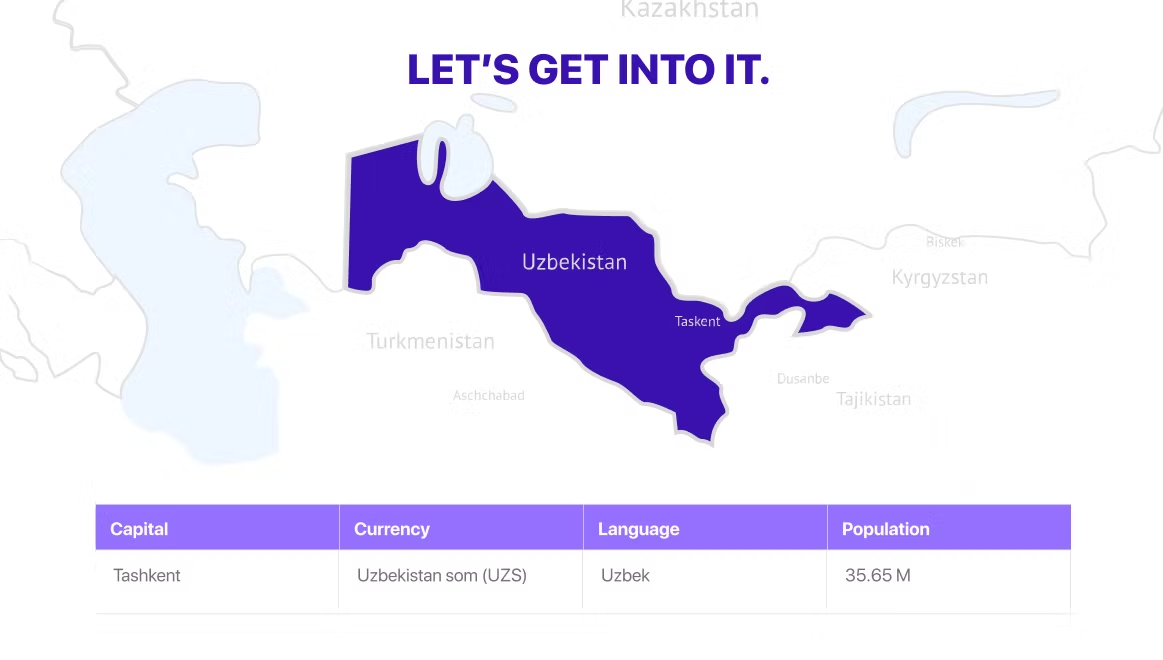
Sponsoring a work permit in Uzbekistan is a long-term commitment, often taking 2 to 3 months before an employee can even enter the country. The government has introduced "Transparent Construction" and other digital portals to reduce corruption and streamline permits, but the reality for many founders is still one of "unjustified rejections" and a lack of clear feedback.
The financial cost of a work permit in Uzbekistan is relatively high, approximately $810 USD for the application alone. For short-term project needs, a "Business Visa" or "E-Visa" might be appropriate, but decision-makers are warned that performing hands-on work on a tourist or standard business visa is illegal and can lead to deportation and company fines.
| Uzbekistan Visa / Fee Type | Cost Expectation (USD) |
| Work Permit Fee | ~$810 |
| Single Entry (up to 1 year) | $160 |
| Multiple Entry (up to 1 year) | $250 |
| E-Visa (30 days) | $20 |
| RUSH Service (6 months) | ~$580 |
Common Compliance Risks and Rejection Factors
A "no-BS" report on sponsorship would be incomplete without addressing why applications fail. In regions like Egypt (which has a 10% foreign hire quota) or Uzbekistan, the most common rejections stem from "discrepancies" in documents or a failure to provide notarised translations of educational certificates.
Other critical red flags include:
- Salary Threshold Errors: Offering a salary that falls below the mandated industry average or the multiples of minimum wage required in countries like Turkey or India.
- Weak Justification: Failing to provide a compelling narrative as to why a foreign hire is superior to a local candidate during the labour market test phase.
- Timing and Forecasting: Waiting until a project is active to start a 3-month permit process in Azerbaijan or Uzbekistan.
- Misalignment of Roles: Applying for a technical visa for an administrative role, which is a common strategy that often results in automatic rejection.
The Decision-Maker’s Checklist for Global Hiring
Scaling in emerging hubs requires a shift from "hiring fast" to "hiring compliantly." The table below provides a checklist for the sponsorship lifecycle.
| Lifecycle Stage | Critical Action Items | Risk to Mitigate |
| Pre-Hiring | Verify 5:1 ratios (Turkey) or quota availability (Azerbaijan/Kazakhstan). | Hiring Blockage |
| Onboarding | Secure 90-day-old FBI background checks and apostilled degrees. | Application Rejection |
| In-Country | Register with tax portals (RS.ge) and social security (SGK) immediately. | Fines/Legal Action |
| Renewal | Initiate renewal process 40–60 days before expiration. | Deportation Risk |
| Offboarding | Pay for repatriation flights if legally required. | Legal Liability |
Conclusion and Strategic Recommendations
Employer sponsorship in the Caucasus, Turkey, and Central Asia is moving toward a model of high transparency and strict local-market protection. The "Compliance Era" is here, and decision-makers must treat immigration as a core operational risk rather than an administrative task. For startups, the EOR model remains the most efficient way to scale without the $50,000+ cost of local entity setup, provided they actively manage their Permanent Establishment risk.
As Georgia implements its sweeping reforms in 2026 and Uzbekistan continues its "Transparent Construction" pilots, the key to success is early preparation and a deep understanding of the labour market tests. Whether it is navigating the 5:1 ratio in Turkey or the unified portal in Armenia, companies that prioritise "no-BS" compliance and human-centric onboarding will win the global race for talent. The future of these emerging hubs is bright, but it is built on a foundation of rigorous legal adherence.
Frequently Asked Questions
1. What is Sponsorship for Employment? (The Definition)
Sponsorship for employment is a formal process where a company takes legal and financial responsibility for a foreign national’s right to work in a specific country.
By sponsoring you, the employer essentially "vouches" for your skills to the government, confirming that:
- The Role is Genuine: The job exists and requires specialised skills.
- The Salary is Fair: You are being paid at or above the mandated "going rate" for 2026.
- No Local Candidate was Found: In many cases, the employer has already conducted a "Labour Market Test" and found no suitable local citizen to fill the role.
2. What Does it Mean to "Require Sponsorship"?
When a job application asks, "Will you now or in the future require sponsorship for employment visa status?" it is asking if you have a permanent, unrestricted right to work in that country.
You should answer "Yes" if you are currently on:
- A Student Visa (F-1, Tier 4): You may have temporary "Post-Graduation" work rights, but you will eventually need the company to "switch" you to a work visa (like an H-1B or Skilled Worker Visa).
- DACA Status: While you have a work permit (EAD), it is temporary. Sponsorship for a Green Card is a way to gain permanent status.
- A Temporary Work Visa: If you are transferring from another company, your new employer must "sponsor" your status transfer.
3. Sponsorship for an Immigration-Related Employment Benefit
This is a technical term often found in 2026 legal filings. It refers to the specific legal "petitions" an employer must file to help you get:
- A Non-Immigrant Visa: Temporary work rights (e.g., L-1 for transfers, H-1B for specialists).
- An Immigrant Visa (Green Card): Permanent residency.
- A D-3 Waiver: A specialised 2026 pathway for DACA recipients or undocumented graduates to bypass "unlawful presence" bars if they have a high-skilled job offer.
4. How the Sponsorship Process Works in 2026?
The process is more expensive and scrutinised than in previous years. Here is the typical "workflow" an employer follows:
- Labour Certification (PERM/LMIA/Test): The employer proves they tried to hire locally but failed.
- The Petition: The company files a formal request with the government (e.g., USCIS in the US, Home Office in the UK, or the State Migration Service in Azerbaijan).
- The "Sponsorship Fee": In 2026, the US introduced a $100,000 supplemental fee for certain overseas H-1B hires, making sponsorship a massive financial commitment.
- Visa Issuance: Once approved, you receive a Certificate of Sponsorship (CoS) or an I-797 Approval Notice, which you take to a consulate to get your visa.
5. What are the minimum salary thresholds for 2026?
Thresholds have increased significantly this year to prevent wage suppression.
- UK: Most Skilled Worker visas now require a minimum of £41,700 or the "going rate" for the role, whichever is higher.
- USA: H-1B and O-1 visas require "prevailing wage" levels that vary by city but often start above $70,000 – $90,000 for tech roles.
6. Can an employer "pass on" the costs to the employee?
In almost all major jurisdictions, it is illegal to ask the employee to pay for the sponsor license or the mandatory government skills charges. While an employee may sometimes pay for their own personal visa application fee, the primary costs of sponsorship must be borne by the company.
7. What happens if a sponsored employee is fired or quits?
Sponsorship is usually "tied" to the employer. If the employment ends:
- Reporting: The employer must notify immigration authorities within a few days (e.g., 10 days in the UK).
- The "Grace Period": The employee typically has 60 days to find a new sponsor or leave the country. If they don't find a new job, their visa is cancelled.
8. What are the ongoing "Sponsor Duties"?
Sponsorship isn't a "one-and-done" deal. In 2026, employers must:
- Monitor Attendance: Report if the employee doesn't show up for work.
- Track Changes: Report any change in salary, job title, or work location.
- Maintain Records: Keep digital copies of passports, right-to-work checks, and payroll history for government audits.
9. Does sponsorship lead to Permanent Residency (Green Card)?
Often, yes, but it is a separate step. In 2026, many employers use "Dual Intent" visas, where the initial work sponsorship serves as a bridge to a permanent residency application (like the EB-2 in the US or ILR in the UK) after 3 to 5 years of service.
.svg)