


What is Employer Sponsorship in Uzbekistan And How Does It Work?
TL;DR
Hiring a foreign employee in Uzbekistan requires the employer to formally “sponsor” that individual’s work authorization. This isn’t just a job offer, it’s a legal commitment. You must obtain a work permit (an official permission from Uzbek authorities) and then facilitate a work visa (often the E-type employment visa) for the person. Compliance is key: expect to conduct a local labor market test, register employment with government agencies, and adhere to all Uzbek labor code requirements.
It’s a process heavy on paperwork and deadlines, but it ensures that your hire can live and work in-country legally. The good news? You don’t have to go it alone. Many companies partner with an Employer of Record to handle sponsorship on their behalf, outsourcing the bureaucracy while they focus on the business.
In short, sponsorship in Uzbekistan can be complex, but with the right guidance (or a local partner like Team Up), it’s absolutely manageable.
Quick Navigation
- TL;DR
- What Is Employer Sponsorship in Uzbekistan? (What Does Sponsorship for Employment Mean)
- Visa Types and Legal Requirements for Foreign Employees in Uzbekistan
- How to Require Sponsorship for Employment: What It Means for Employers and Foreign Candidates
- Direct Sponsorship vs Employer of Record: Options for Visa Sponsorship for Employment
- Conclusion: Navigating Sponsorship with Confidence
- FAQ
What Is Employer Sponsorship in Uzbekistan? (What Does Sponsorship for Employment Mean)
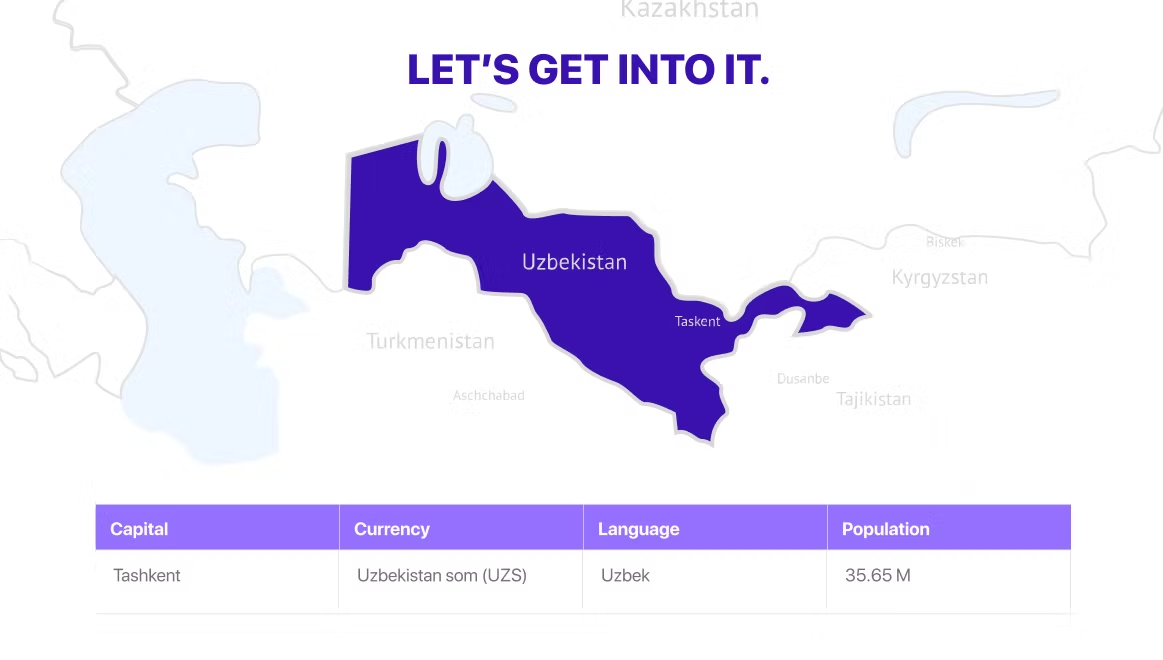
Employer sponsorship in Uzbekistan means that a company takes on the legal responsibility to sponsor a foreign individual’s right to work in the country. In practice, this involves the employer obtaining the necessary government permissions (like a work permit) and then helping the individual secure a work visa. Unlike simply hiring a local employee, hiring a foreign national isn’t as simple as signing a contract and booking a flight. Uzbekistan’s immigration laws require that a foreign worker be formally tied to a sponsoring employer at all times – that’s the essence of sponsorship. The sponsor is accountable to the government for that worker’s status.
In everyday terms, if you want to hire a software developer from abroad or bring over your star project manager, you (the employer) must go through a process to prove to the Uzbek authorities that this hire is justified and legal.
That includes showing there’s a legitimate job, that you couldn’t find a local to do it (more on the labor market test soon), and that you’ll comply with all local regulations during their employment. The end result of successful sponsorship is a work permit for the employee (sometimes called a “confirmation” or authorization to work) and a work visa stamped in their passport. With those, your new team member can live in Tashkent (or anywhere in Uzbekistan) and contribute to your company without running afoul of the law.
It’s important to note that employer sponsorship is not a one-time rubber stamp. It’s an ongoing commitment. If the worker changes jobs, their sponsorship doesn’t transfer – the next employer has to sponsor them all over again. If the project ends and you no longer need that employee, you must notify authorities and even facilitate their visa cancellation or exit. Sponsorship is essentially a formal promise: you’re vouching for this person’s role in your company and taking on the legal duties that come with it.

Visa Types and Legal Requirements for Foreign Employees in Uzbekistan
When planning to sponsor a foreign employee in Uzbekistan, you’ll encounter a two-part challenge: obtaining a work permit and securing the appropriate visa. Along the way, you must navigate local labor laws designed to protect the domestic workforce and ensure any foreign hiring is above-board.
Work Permits vs Work Visas: How Visa Sponsorship for Employment Works
Step 1: Work Permit (Employment Authorization).
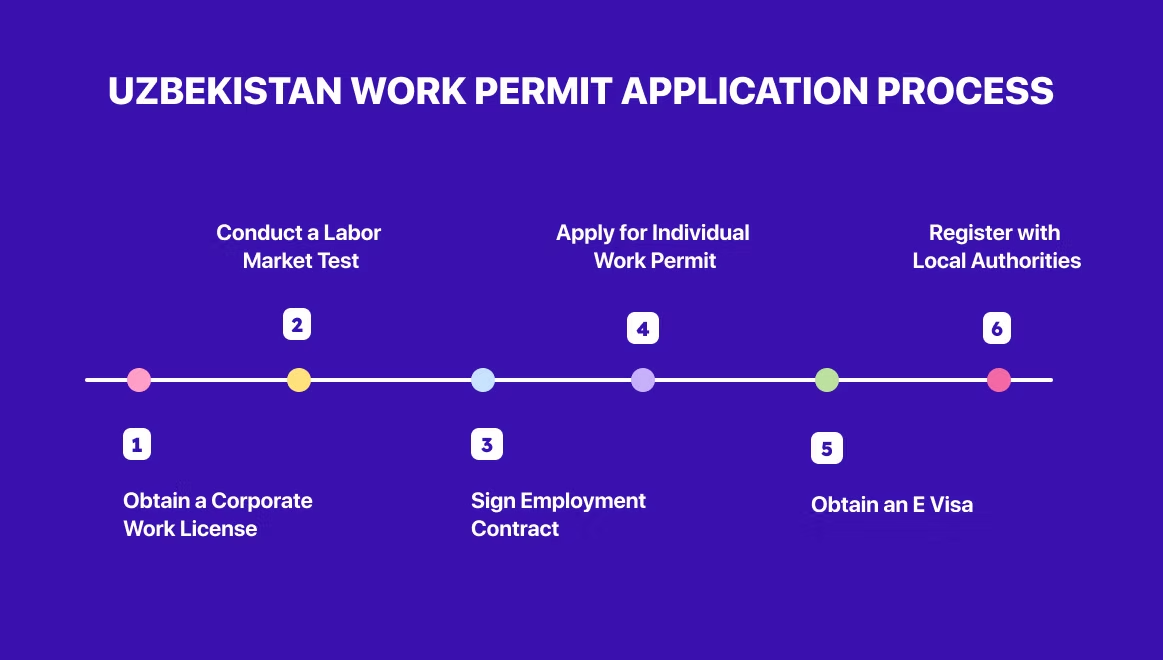
Before your future hire even applies for a visa, you, as the employer, must get a work permit approved. This permit is essentially the Uzbek government saying, “Yes, Company X is allowed to employ Person Y in this specific role.” It’s a piece of paper (now often a digital certificate) that binds the foreign employee to your organization. Without it, any work would be considered illegal. The permit application is submitted to the Ministry of Employment and Labor Relations (and its related Agency for External Labor Migration) by the employer. It typically requires details about your company, the role in question, and the candidate’s qualifications.
Step 2: Work Visa (Entry/Residence Visa).
Once the work permit is granted, the foreign national can then apply for an E-type employment visa at a Uzbek embassy or consulate in their home country (or current country of residence). The E visa is the primary visa class for employment purposes in Uzbekistan.
It’s usually valid for up to one year and can be renewed annually as long as the work permit is kept up to date. This visa allows the individual to enter Uzbekistan and lawfully take up the position with your company. In some cases (like transfers of existing expats), the person might already be in Uzbekistan on a different visa; they would then need to convert their status to a work-residence permit after you secure the work authorization.
It’s useful to think of it this way:
The work permit is tied to the job and employer, while the visa is tied to the person’s ability to live in Uzbekistan. Both are required – permit first, then visa. There are a few other visa types to be aware of: for example, Uzbekistan offers a T-type visa for certain technicians and skilled contractors coming for specific projects. However, a T visa is often short-term and project-specific. And a business visa (B-type) is not a substitute for a work visa – it might let someone attend meetings or conferences, but it does not confer the right to earn a salary in Uzbekistan. Attempting to have someone work on a business or tourist visa is a recipe for trouble.
Labor Market Test and Employer Obligations for Employment Sponsorship
Uzbekistan, like many countries, wants to ensure you’re not displacing local workers unfairly by hiring from abroad. Enter the labor market test. Before approving a work permit, authorities ask: Did you at least try to hire an Uzbek for this role? Practically, this means you’ll need to obtain a labor market test certificate as part of your work permit application.
To get this, employers typically have to post the job locally (for a certain duration or through a government job portal) and show that no suitable local candidates were available. Only then will the Ministry green-light your foreign hire.
This step can sound bureaucratic, but it’s a core part of the process – skip it, and your work permit will not be issued.
In addition to the labor test, there are other employer obligations baked into the sponsorship process:
- Registering the Employment: Once a foreign worker is hired, you must register their employment contract with Uzbekistan’s Agency for External Labor Migration. This is a formal way of telling the state, “John Doe from Canada works for us now, in this role, for this duration.” It creates a record that ties John Doe’s work permit to an actual contract and company.
- Compliance with the Labor Code: Uzbekistan’s Labor Code (last amended in 2022) sets out employment standards that apply to all employees, including foreigners. As a sponsoring employer, you need to issue a proper local contract (in Uzbek or dual Uzbek-Russian/English), provide all mandatory benefits, respect working hour limits, etc. The contract likely needs clauses covering job title, salary in Uzbek soum, and termination conditions per local law. In short, you must treat the foreign employee just like a local hire under the law, with no informal arrangements.
- Salary and Quotas: In some cases, regulations set a minimum salary level for foreign hires or limits on how many foreigners a company can sponsor. For instance, to protect the local labor market, the government may require that foreign specialists be paid above a certain threshold (so you’re not importing cheap labor). As of recent updates, there have been minimal salary hikes for foreign workers in certain categories (one 2025 update required roles like consultants or managers to have salaries around $5,000+ per month, for example). Always check the current rules for the specific position you’re hiring for.
- Fees: There are government fees for processing work permit applications and for issuance of the permit. These can vary depending on the category of the foreign worker. (By regulation, hiring a highly qualified expert might incur a smaller fee than hiring a general worker – the fee can range widely, e.g. “1 × base unit” for top specialists up to “30 × base unit” for standard hires, as per recent government schedules.) While not exorbitant, these fees are part of the cost of sponsorship and must be paid to obtain the approvals.
The labor market test and these obligations underscore that sponsorship is an active, regulated process. It’s not enough to just want to hire a foreigner – you must justify it and then follow through with compliant employment. Uzbekistan takes this seriously: the authorities can and do deny work permit requests if an employer hasn’t done their homework in trying to hire locally, or if the paperwork isn’t correct. The process is detailed, strict, and unforgiving, in part to protect local labor and ensure any foreign workers are genuinely needed. (Sound familiar? Other countries in the region have similar concepts. Georgia, for instance, rolled out a rigorous labor market testing system in 2026, and Azerbaijan maintains its own list of protected local roles. Uzbekistan’s approach is very much in line with a global trend of “local first, but bring in foreign talent where there are true skill gaps.”)
Documentation and Timeline for Visa Sponsorship for Employment in Uzbekistan
So, what do you actually need to gather to sponsor someone? Documentation is the backbone of your application:
- Employment Contract or Job Offer: A signed job offer letter or contract detailing the role, salary, and terms. This shows the legitimacy of the employment.
- Employee’s Passport (copy) and Passport Photos: The basic ID required for any visa application.
- Proof of Qualifications: Diplomas, certificates, or professional licenses of the candidate to prove they’re qualified for the job. If you’re hiring an IT specialist, for instance, you might include their degree in computer science and any certifications.
- Medical Certificate: Uzbekistan commonly asks for a health check, including an HIV/AIDS test, for work visa applicants. Your candidate may need to provide a medical clearance from their doctor or an authorized clinic.
- Police Clearance: A background check from the candidate’s home country to ensure they have no serious criminal record.
- Company Documents: As the employer, you might need to submit copies of your business license/registration in Uzbekistan, tax ID, or a letter explaining the need for this foreign hire.
- Labor Market Test Evidence: Proof that you advertised the job locally (e.g., printouts or reports from the job portal, along with the labor market test certificate issued by the labor agency).
All foreign-language documents (e.g., a diploma from a UK university) must be translated into Uzbek or Russian and notarized for authenticity. It’s wise to double-check each document requirement with the latest guidelines or hire an immigration specialist, because missing even one document can delay the process by weeks.
In terms of timeline, obtaining the work permit confirmation can take anywhere from about 15 to 30 business days in Uzbekistan. This depends on the volume of applications and whether you opted for any expedited process (in some cases, paying an extra fee can speed it up). After the permit is approved, the visa application at an embassy usually takes another 1-2 weeks (depending on the embassy and if all papers are in order). So from start to finish, expect roughly 1 to 2 months before your foreign hire is fully legal to work in Uzbekistan. It’s not something you pull off in a few days, so plan accordingly.
One more critical step: once your employee lands in Uzbekistan with their shiny new visa, they must register their residence within 3 days of arrival. This is done with the local migration office (OVIR) or sometimes automatically if they’re staying in a hotel. It’s a carry-over from old post-Soviet rules, but it’s still enforced – failing to register can result in fines or problems when exiting the country. As the employer, you should assist or remind your newcomer about this. After that, they’re all set to start working under your sponsorship.
How to Require Sponsorship for Employment: What It Means for Employers and Foreign Candidates
You’ve probably seen the note on candidates’ CVs or heard the question in interviews: “Do you require sponsorship for employment?” When it comes to Uzbekistan, if a candidate is not a citizen or permanent resident, the answer is almost always “yes.” Requiring sponsorship for employment means that the individual cannot legally work for you in Uzbekistan unless you, as the employer, go through the steps we outlined above to secure their work authorization and visa. In other words, the government isn’t going to give them a work permit just because they want one – a company has to step up and be the sponsor.
Key realities for employers
- You must be officially registered in Uzbekistan. Only Uzbek legal entities (or representative offices) can sponsor work permits. If you’re an international company with no presence in Uzbekistan, you can’t directly sponsor someone – you’d first need to establish a local entity or use a third party (more on that soon).
- Commitment to Compliance. By agreeing to sponsor a candidate, you’re committing to handling all the legal procedures on their behalf. Expect to fill out forms, submit letters, and deal with government portals. If that sounds like a lot, it is. Some employers shy away from candidates who need sponsorship simply because they don’t have the capacity to take on this extra work. But if that candidate is a rockstar developer or a niche specialist you really need, the effort can be worth it.
- Responsibility for the Employee’s Status. Once the person is on board, your responsibility isn’t over. You must monitor the expiry dates of their permit and visa. If their work permit needs renewal after a year, that’s on you to apply for an extension in time. If you end the employment, you have to inform the authorities and possibly even facilitate the cancellation of their visa or ensure they depart. Essentially, requiring sponsorship means ongoing paperwork as long as that person works for you in Uzbekistan.
- Visa Status and HR Policies. From an HR perspective, you may need to assist the employee with things like visa renewals, obtaining a residency card (if applicable), and ensuring they always have a valid registration in the country. It becomes a part of your HR compliance checklist to track work authorization alongside things like performance reviews or contract renewals.
Real scenario
Let’s put this into a real scenario. Suppose you found a brilliant data scientist from India who’s perfect for your Tashkent-based team. They mention they’ll “require sponsorship for employment”. By agreeing to hire them, you’re agreeing to:
- Be their petitioner – fill out and submit the work permit application as their prospective employer.
- Wait for approval – you can’t start their employment until the permit is granted (no sneaking them in on a tourist visa to work in the meantime!).
- Secure their visa – send them the invite letter or permit so they can get the work visa. Perhaps even provide documentation to help bring their family if they’ll relocate with dependents.
- Onboard them legally – make sure they get registered, have a tax ID, are enrolled in social insurance, etc., all per Uzbek law.
- Maintain compliance – every month, ensure their taxes and contributions are paid. Every year, renew that permit/visa. If rules change (say, Uzbekistan introduces an online tracking system or new insurance requirement in 2026), you adapt and comply.
Now, this might sound daunting. It’s certainly more involved than hiring a local Uzbek employee (where none of these immigration steps are needed). However, many companies do it successfully – especially for critical roles. Uzbekistan’s government agencies are generally cooperative if you follow the rules and provide complete documentation.
One tip: If you’re new to this, it’s wise to hire a local immigration lawyer or consultant for the first go. They can prepare the application and guide you through the process so you don’t make a costly mistake. Alternatively, as we’ll discuss next, you might consider having someone else handle the heavy lifting entirely – that’s where an Employer of Record comes in.
In summary, “requires sponsorship” is not a deal-breaker, but it is a commitment. It means extra steps, lead time, and ensuring ongoing legal compliance for that hire. As an employer, you should weigh the value that international talent brings against the effort of sponsoring them. Often, for skilled roles or executive positions, the scales tip heavily in favor of making it work. And remember, once you have the processes down (or a partner to assist), sponsoring additional employees becomes easier – it’s the first one that’s the learning curve.
Direct Sponsorship vs Employer of Record: Options for Visa Sponsorship for Employment
When faced with the prospect of sponsorship, companies have two main routes: do it yourself (direct sponsorship) or use an Employer of Record service that sponsors the employee for you. Each approach has its pros and cons. Let’s break them down.
Direct Hiring and Sponsoring Employees in Uzbekistan
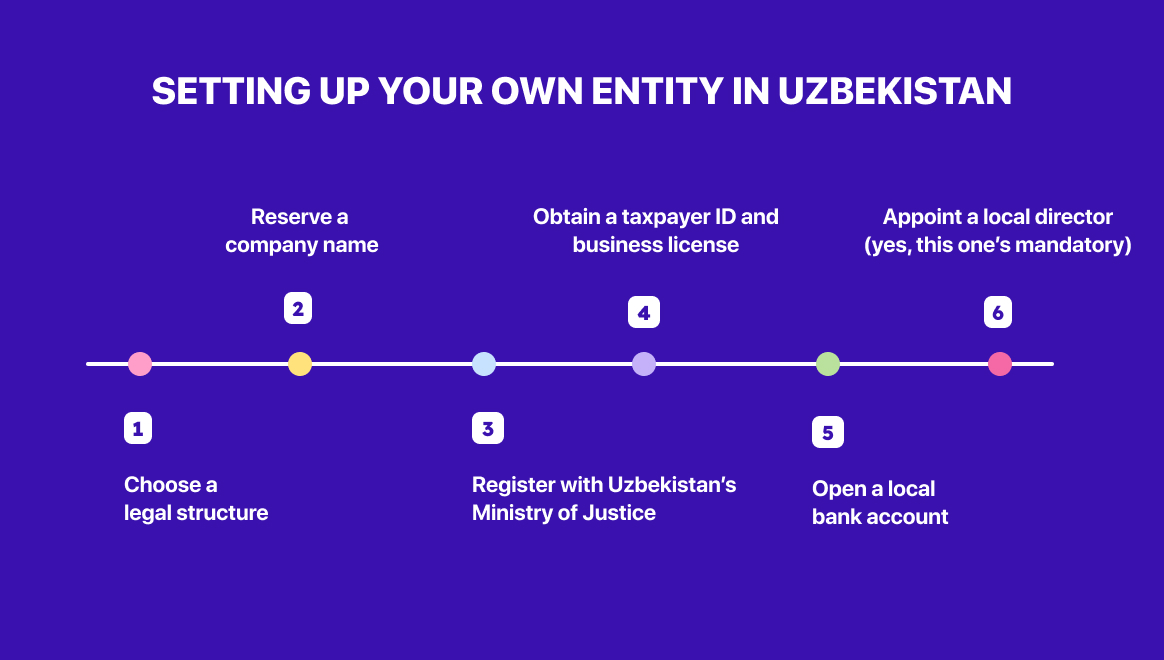
Direct sponsorship is the traditional path. Here’s what it entails:
- Local Entity Requirement: To sponsor someone in Uzbekistan, your company must have a legal presence in Uzbekistan. That usually means registering a subsidiary or an LLC in-country. If you haven’t done that, this route first requires you to set up your own entity, which is a whole project in itself (registrations, bank accounts, office address, hiring an accountant, etc.). Direct hiring isn’t really an option for a foreign company that doesn’t yet exist in Uzbekistan’s eyes.
- Control and Autonomy: On the upside, if you do have a local company, direct hiring gives you full control. The employment is 100% yours. You’ll sign the employment contract as the employer, and you’ll deal with the government directly for the permit and visa. Some companies prefer this control, especially larger corporations with HR departments familiar with immigration.
- Bureaucracy and Know-how: The challenge is that you need to know (or learn) how to navigate Uzbek bureaucracy. That means understanding which office to file at, how to fill out the labor test forms in Uzbek, when to push if delays occur, etc. If you only hire one foreigner ever, you’ll invest a lot of time learning these ropes for a one-off result. If you plan multiple hires, you might justify hiring a dedicated HR or mobility specialist on your team.
- Cost Considerations: Setting up your own entity has costs – government fees, possibly renting office space (even if just a desk), and hiring local staff like an accountant or lawyer. These are overhead costs before you even get to the permit fees or the foreigner’s salary. However, if you already have an Uzbekistan entity for other business operations, then it’s part of normal operations.
- Risk and Liability: All the compliance risk lies with you. If something is overlooked (say, the employee’s visa lapses because nobody renewed it on time), your company is on the hook for penalties. Uzbekistan can impose fines, and in serious cases, revoke permits or even bar a company from future sponsorship if rules are flouted. It’s rare if you’re earnest, but it underscores that you carry the liability directly.
Example: Let’s say you’re a medium-sized tech company expanding to Uzbekistan, and you set up a local LLC in Tashkent. You find a great engineer in Poland willing to relocate. Going the direct route, your Uzbekistan HR manager will coordinate with the Ministry to get the labor market test going, file for the work permit, etc. Meanwhile, your accountant ensures the company meets the financial criteria (e.g., showing the required turnover or capital if asked as part of the process). You wait a few weeks, get the permit, send the invitation to the engineer, they get their visa, and off you go. Each step you handled in-house. Now the engineer is on your Uzbek entity’s payroll, and you handle their taxes monthly. You’ve effectively become proficient in Uzbekistan’s employment law through this exercise. It can work smoothly if you have the infrastructure and volume to support it.
Using an Employer of Record to Handle Employment Visa Sponsorship
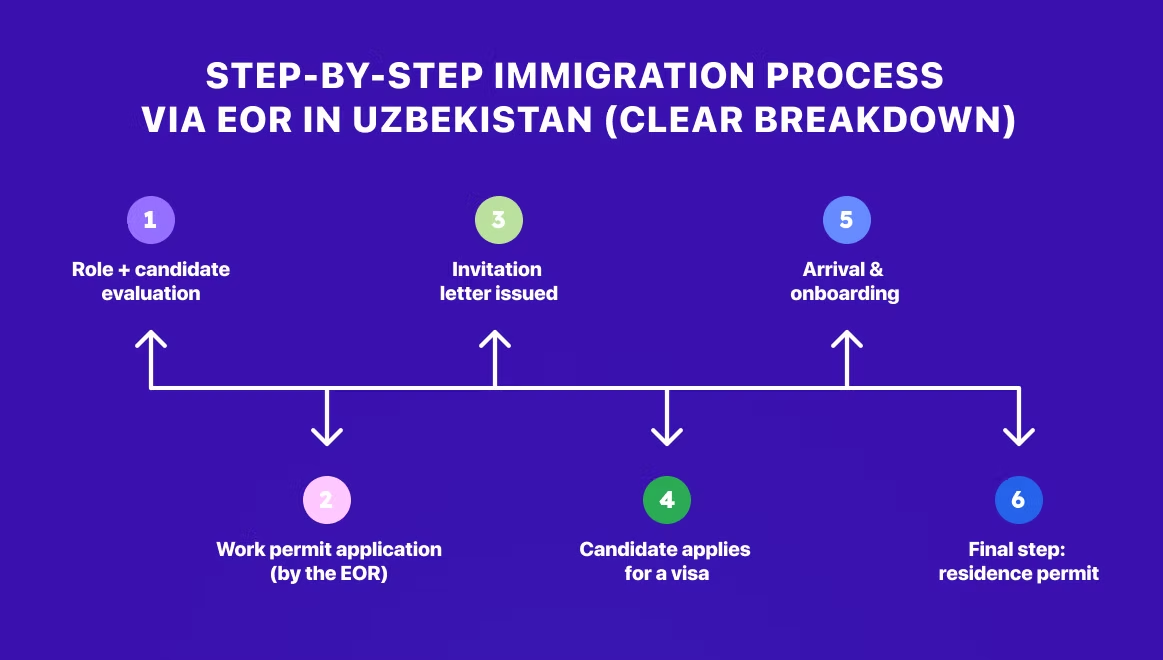
Now, what if you either don’t have a local entity or prefer not to deal with all this hassle? This is where an Employer of Record (EOR) in Uzbekistan comes in. An EOR is sometimes called a “local partner” or “local employer.” In this model, you engage a company like Team Up that already has a fully compliant entity in Uzbekistan. They become the official employer of your chosen candidate on paper, and thus, they handle the sponsorship process.
How does this look:
- No Entity Needed: You do not need to register your own company in Uzbekistan. The EOR’s entity will hire the person. This alone can save months of setup time and high cost, especially if Uzbekistan is a new or small market for you.
- EOR Handles Permits and Visas: The Employer of Record will take care of the entire work permit application and visa sponsorship on your behalf. They essentially slot the new hire into their organization’s headcount. Since they are a local employer that likely regularly deals with work permits, they know the drill inside out. For example, Team Up’s local team will prepare all required documents, submit the labor market test, deal with any queries from the Ministry, and obtain the permit. They’ll then provide the individual with the paperwork to get the visa. In short, the EOR provider becomes the sponsor. (We cover the detailed mechanics of this in our article on work permits via EOR, which shows how an EOR simplifies immigration.)
- You Still Get Your Worker: The critical point is that even though legally the person is employed by the EOR, functionally, they work for you. You direct their day-to-day work, they are dedicated to your projects, and you can even call them “your employee” in the practical sense. The EOR doesn’t interfere in the daily work; they just handle the admin side.
- Payroll and Compliance Outsourced: The EOR will put the person on their payroll, pay their salary (which you fund), withhold taxes, pay social contributions to the Uzbek state, and ensure all benefits (like paid leave, insurance contributions, etc.) are provided as required by law. Essentially, the EOR guarantees compliance. You get a simple invoice, often monthly, covering the salary and a fee for the EOR service, and the EOR takes care of distributing the salary and paying the government. (Team Up, for instance, offers a flat fee model – one invoice that wraps in salary, taxes, and our service fee – so you know exactly what you’re paying each month.)
- Reduced Risk: Since the EOR is the legal employer, a lot of the compliance risk is technically on them. It’s in their interest (and contractual obligation) to do everything by the book – that’s what you’re paying them for. If something goes wrong due to compliance, the EOR would be responsible for fixing it. Of course, you should always partner with a reputable EOR that has a strong track record. (Not all providers are equal; some global firms subcontract to third parties, which can introduce uncertainty. We’ve discussed comparing EOR providers in another piece.
- Flexibility: EOR arrangements can be great if you’re testing the waters in a country. Maybe you want to hire one or two people first before committing to opening an office. The EOR allows you to do that quickly. If down the road you grow to the point of establishing your own entity, you can always transition those employees from the EOR to your new entity (with a new sponsorship process, but the EOR can often help with the handover).
From a commercial standpoint, using an EOR is often seen as a variable cost alternative to a fixed cost investment of setting up locally. You pay per employee as needed, rather than bearing the standing cost of a full company infrastructure when you only have a tiny team.
Example (revisited): That same engineer from Poland – instead of your HR and accountant doing the permits, you engage Team Up as an EOR. Team Up hires the engineer through its Uzbekistan subsidiary. Team Up’s team files all the paperwork, obtains the work permit (our folks might even walk into the Ministry office to smooth things out, because we do this routinely), and secures the visa. The engineer arrives and officially is an “employee of Team Up Uzbekistan” assigned to work on your project. You manage them daily, but we handle their payroll and make sure, for instance, their income tax and pension contributions get paid to the Uzbek authorities. If labor laws change, we adapt instantly – you don’t have to worry because our contract with you ensures we cover compliance. If you decide to end the project, we handle the offboarding legally as well (cancelling the permit, etc.). It’s employment-as-a-service, in a way.
Conclusion: Navigating Sponsorship with Confidence
Uzbekistan is opening up and attracting global businesses, but navigating its employer sponsorship process is a journey through rules and requirements. The key takeaways for any decision-maker are clear: you cannot bypass compliance, and being thorough is not optional – it’s mandatory. From proving that your hire isn’t taking a local’s job, to filing every form in the correct way, the sponsorship process can feel like a maze. Yet, it’s a maze that can be mastered.
Uzbekistan’s talent pool and strategic location can be a major asset to your organization. Don’t let the fear of paperwork or compliance complexity stop you from tapping into that potential. With the right partner or preparation, you can hire globally and compliantly, turning what could be a bureaucratic headache into just another smooth business process.
Ready to hire in Uzbekistan? Whether you’re sponsoring a single software engineer or relocating a whole team, you now have a blueprint of how it works. And remember, you’re not alone – Team Up and services like ours exist precisely to guide employers out of the labyrinth. Uzbekistan’s doors are open; with proper sponsorship, your company and your new international hires can walk through them confidently, compliantly, and on the path to success.
FAQ
1. What is sponsorship for employment in Uzbekistan?
It is a dual-approval process. The employer must first obtain a Corporate Work License (the right for the company to hire foreigners) and then secure an Individual Confirmation (the right for a specific person to work). The employer acts as the legal "sponsor," responsible for the employee’s salary, tax withholding, and migration compliance.
2. What does it mean to require sponsorship for employment?
When a candidate says they require sponsorship for employment, it means they do not have a permanent residency permit or a specialized visa (like an IT-Visa). The employer must initiate the "Labor Market Test" and pay the state fees to prove that the foreign hire is necessary for the business.
3. How does the "Labor Market Test" work in 2026?
Before sponsoring a foreigner, you must list the vacancy on the National Job Vacancy Database for at least 15 days. If no qualified local citizen is found, you can proceed with the sponsorship application. Failure to do this can lead to the rejection of the work permit.
4. Are there exemptions for "Highly Qualified Specialists"?
Yes. If you hire a "Highly Qualified Specialist" (HQS) with a salary of at least $60,000 USD/year and a top-tier university degree, you do not need the Corporate Work License. The sponsorship process is fast-tracked, and the permit is valid for up to 3 years.
5. What is the "IT-Visa" sponsorship benefit?
In 2026, residents of IT Park Uzbekistan can sponsor an IT-Visa for their staff. This visa is valid for 3 years and, crucially, removes the requirement for a separate work permit. It also gives the employee equal social rights (education, healthcare) to Uzbek citizens.
6. Do I need sponsorship for employment visa status if the hire is local?
No. Sponsorship for employment visa status only applies to foreign nationals. For local citizens, you simply register their employment contract in the Unified National Labour System (UNLS).
7. Define sponsorship for employment visa status for "Remote" teams.
If you have a team living in Uzbekistan but working for your foreign entity, you cannot technically "sponsor" them without a local presence. In this case, companies typically use an Employer of Record (EOR) who acts as the local sponsor, managing the 2026 payroll and visa compliance on your behalf.
8. What are the 2026 penalties for hiring without sponsorship?
Uzbekistan has significantly increased enforcement. Fines for employing a foreigner without proper authorization can reach up to 50 times the Base Calculation Value (BCV) for repeat violations. In 2026, the digital MAS system automatically flags unregistered foreign employees during tax audits.
.svg)


