


EOR vs Payroll Outsourcing in Canada: What's the Difference?

A London fintech company wants to hire two compliance analysts in Toronto. It has no Canadian subsidiary, no CRA business number, and no payroll infrastructure. Two vendors pitch for the work. One offers to run payroll. The other offers to become the legal employer. Those are fundamentally different propositions, and choosing the wrong one can leave the company exposed to penalties it never saw coming.
The distinction between an employer of record and a payroll outsourcing provider shapes who carries legal liability, who files with the Canada Revenue Agency, and who bears termination risk under provincial employment standards. Both models involve paying Canadian workers. Only one transfers the full weight of employment law obligations off your books.
This article breaks down how each model works under Canadian law, where the compliance boundaries fall, and which structure fits your hiring scenario.
What Is an Employer of Record?

An EOR is a third-party organization that becomes the legal employer of your Canadian workers. You direct their daily tasks. The EOR holds the employment contract, remits statutory deductions to CRA, and carries the obligations that Canadian employment law assigns to an employer.
How an EOR Legally Employs Workers on Your Behalf
The EOR signs the employment contract with each worker under its own CRA business number. It registers as the employer for Canada Pension Plan contributions, Employment Insurance premiums, and income tax withholding. It issues T4 slips at year-end. It manages termination in compliance with the applicable provincial employment standards act.
Your company retains operational control. You assign projects, set performance goals, and manage the worker's output. The EOR owns the legal relationship. That split is the core mechanism. A US SaaS company used this model to hire four customer success managers in Vancouver through an EOR in 12 days. Within six months, the team had grown to nine without the company ever incorporating in Canada.
EOR vs PEO: Why the Distinction Matters in Canada
A professional employer organization (PEO) operates through co-employment. Both you and the PEO share employer responsibilities. An EOR takes sole legal employer status. In Canada, this distinction matters because provincial employment standards assign specific obligations to "the employer." Under an EOR, that party is clearly the EOR. Under a PEO co-employment arrangement, the allocation of liability can be less clear.
What an Employer of Record Is NOT Responsible For
The EOR does not control your business decisions. It does not set your worker's KPIs, manage their career development, or decide project scope. It does not replace your management layer. Think of it as owning the legal container. You fill that container with the work.
What Is Payroll Outsourcing in Canada?

Payroll outsourcing means hiring a third-party provider to handle the mechanical side of paying workers. The provider processes pay runs, calculates statutory deductions, and remits payments to CRA on your behalf. You remain the legal employer.
What a Payroll Outsourcing Provider Actually Does
The provider takes your employee data and runs the numbers. It calculates CPP contributions, EI premiums, and income tax withholding based on CRA's annually published rates. It deposits net pay into employee bank accounts. It generates year-end T4 slips and files T4 summaries with CRA.
Some providers also handle provincial health tax remittances in provinces that levy them. A Montreal-based marketing agency with 15 employees used a payroll outsourcing provider to eliminate manual pay processing errors. The agency cut its internal payroll administration time by roughly 70 percent within two months. The agency remained the employer on every document.
Record of Employment in Canada: What It Means and Who Issues It
A Record of Employment (ROE) is a government-mandated document issued when an employee experiences an interruption of earnings. Service Canada uses the ROE to determine eligibility for Employment Insurance benefits. The legal employer is responsible for issuing the ROE. Under payroll outsourcing, that employer is still you. Under an EOR arrangement, the EOR issues it.
Why Payroll Outsourcing Does Not Equal Legal Compliance Coverage
Payroll outsourcing covers pay processing. It does not cover employment law obligations. If you dismiss an employee, your payroll provider does not calculate severance under provincial standards. It does not draft compliant termination letters. It does not defend you before a labour board. Those responsibilities stay with you as the legal employer. Companies that treat payroll outsourcing as a complete employment solution often discover this gap at the worst possible moment.
EOR vs Payroll Outsourcing: Key Differences
| Dimension | Employer of Record | Payroll Outsourcing |
|---|---|---|
| Legal employer status | EOR is the legal employer | Client remains the legal employer |
| Employment contracts | EOR drafts and holds contracts | Client drafts its own contracts |
| CRA registration | EOR registers under its business number | Client uses its own CRA business number |
| Termination liability | EOR manages termination and severance | Client bears full termination risk |
| Provincial compliance | EOR ensures compliance across provinces | Client must monitor each province |
| ROE issuance | EOR issues the ROE | Client issues the ROE |
| Entity requirement | No Canadian entity needed | Client must have a Canadian entity |
Legal Employer Status: Who Owns the Risk
The table above captures the structural divide. The single most consequential row is legal employer status. When the EOR holds that status, it absorbs the obligations that flow from Canadian employment law. When a payroll provider processes your payroll, every legal obligation remains yours.
This is not a theoretical distinction. Provincial employment standards acts assign specific duties to "the employer." Minimum notice periods, statutory holidays, overtime thresholds, and leave entitlements all attach to whoever holds that legal designation. A payroll provider will not appear in front of a provincial labour board on your behalf. An EOR will.
Compliance Scope: Employment Standards, Benefits, and Termination
An EOR manages the full compliance surface. It tracks provincial employment standards, administers statutory benefits, and handles termination procedures. For companies hiring across Ontario, British Columbia, and Quebec simultaneously, the EOR absorbs the complexity of three different employment standards frameworks.
Payroll outsourcing addresses only the deduction and remittance layer. It ensures CRA receives the right amounts on time. That is valuable but narrow.
Operational Fit: Which Model Suits Which Business Structure
A company with an established Canadian subsidiary and an in-house HR team benefits from payroll outsourcing. The compliance infrastructure already exists. The company just needs the mechanical processing done accurately.
A company without a Canadian entity needs an employer of record in Canada. There is no workaround. Without a CRA business number and provincial employer registration, you cannot legally employ workers in Canada. The EOR fills that structural gap entirely.
When to Choose an Employer of Record

An EOR becomes the right model when you need legal employment capability in Canada and lack the infrastructure to provide it yourself.
Hiring in Canada Without a Local Legal Entity
Foreign companies face a binary choice. Incorporate a Canadian subsidiary or use an EOR. Incorporation involves federal or provincial registration, CRA account setup, provincial employer health tax registration, and opening a Canadian bank account. That process typically takes three to six months from first filing to operational payroll.
A Berlin-based e-commerce company that needed two logistics coordinators in Calgary could not wait that long. It engaged an EOR and had both employees under compliant contracts within 10 business days. Eighteen months later, the company incorporated its own Canadian subsidiary and transitioned the employees in-house. The EOR served as the bridge.
Scaling Across Multiple Provinces: Why EOR Simplifies Multi-Jurisdictional Compliance
Canada's employment law is provincial. Ontario's Employment Standards Act differs from British Columbia's and from Quebec's Act Respecting Labour Standards. Overtime rules, statutory holiday calendars, minimum notice periods, and leave entitlements vary across provinces. Each province sets its own framework independently.
An EOR tracks these differences centrally. When you hire an employee in Alberta and another in Nova Scotia, the EOR applies the correct provincial standards to each. Your team does not need to monitor legislative changes across 13 jurisdictions.
How to Evaluate Employer of Record Companies in Canada
Three criteria matter most when selecting an EOR for Canadian operations. First, confirm whether the provider operates through its own legal entity or through a local partner. Owned entities give you direct accountability. Second, ask who holds the employment contract and whether the provider assumes termination liability explicitly in its service agreement. Third, verify that the provider administers employee benefits in Canada in compliance with provincial requirements, not just federal minimums.
Watch out: Some providers market themselves as EOR services but subcontract the legal employer role to a local partner. In that model, your compliance depends on a party you have no direct relationship with. Ask for the name of the entity that will appear on your employees' T4 slips.
Team Up operates through owned legal entities in its core markets and handles employment contracts, payroll, and statutory compliance directly. That direct accountability model avoids the partner-network exposure that can leave companies without recourse when compliance questions arise. For companies building teams across Canada and other markets simultaneously, a single EOR relationship removes the need to coordinate multiple vendors across jurisdictions.
How to Transition from Payroll Outsourcing to an EOR in Canada

The transition starts with a compliance audit of your current setup. Map every obligation you hold as the legal employer: provincial employment standards, benefit plans, CRA remittance accounts, and any active Records of Employment. This audit exposes gaps your payroll provider was never responsible for.
A Copenhagen fintech company with four customer support staff in Toronto discovered during this audit that it had never registered for Ontario's Employer Health Tax. The payroll provider had processed deductions correctly but had no obligation to flag the missing registration. Switching to an EOR resolved that gap within the first week.
Once you select an EOR, the provider issues new employment agreements to each worker. These agreements must comply with the employment standards legislation of the province where each employee works. Employees sign with the EOR as their new legal employer. Their tenure, accrued entitlements, and benefits carry forward under the new arrangement.
Run at least one parallel payroll cycle before cutting over. Both the outgoing payroll provider and the incoming EOR process the same period. You compare outputs line by line: gross pay, CPP, EI, provincial tax, and net deposit. Discrepancies surface here, not after the old provider is gone.
The final step is decommissioning. Cancel your CRA payroll account only after the EOR confirms its own account is active and receiving remittances. Closing the old account prematurely creates a window where no entity is remitting statutory deductions. That window triggers CRA penalties with interest.
EOR vs Payroll Outsourcing: Cost and Risk Comparison
Pricing models differ in structure, not just amount. Payroll outsourcing providers typically charge per employee per pay run. An EOR charges a monthly per-employee fee that bundles legal employment, payroll, compliance, and statutory benefits administration into one rate.
The raw per-employee cost of an EOR is higher. That comparison misses the cost of what payroll outsourcing does not cover.
| Factor | Payroll Outsourcing | Employer of Record |
|---|---|---|
| Legal employer status | Client retains | EOR assumes |
| CRA remittance liability | Client bears | EOR bears |
| Wrongful dismissal exposure | Client bears | EOR manages |
| Provincial employment law compliance | Client must monitor | EOR monitors and adapts |
| Worker classification risk | Not addressed | EOR classifies and defends |
| Entity requirement in Canada | Client must have one | Not required |
| Typical fee structure | Per employee per pay run | Monthly per employee, all-inclusive |
| Scaling to other countries | Separate vendor per country | Single provider across markets |
A London recruitment agency operating in Canada learned this cost difference the hard way. It used a payroll provider for three employees in British Columbia. When one employee filed an Employment Standards complaint, the agency discovered it needed Canadian legal counsel, a registered agent, and HR documentation it had never created. Legal fees exceeded what twelve months of EOR service would have cost.
The cost calculation changes again when you hire across multiple provinces. Each province has its own employment standards, vacation entitlements, and statutory holidays. An EOR absorbs that complexity. A payroll provider processes the numbers you give it. If you give it the wrong vacation accrual rate for Alberta versus Ontario, the provider runs the wrong number without question.
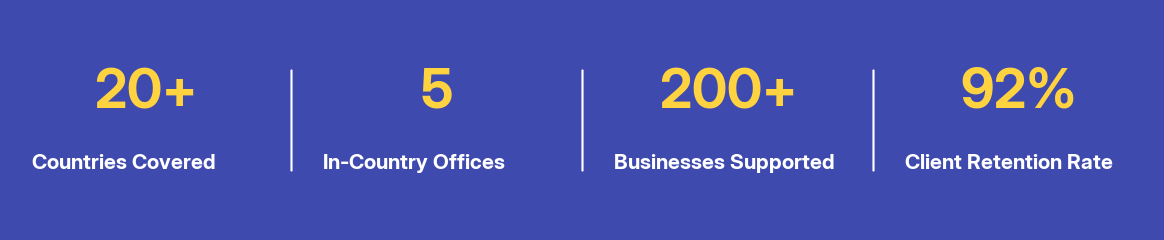
For companies hiring in Canada and other markets simultaneously, a single EOR relationship replaces the patchwork of local payroll vendors, legal counsel, and compliance consultants. Team Up covers 20+ countries through owned entities and direct operations, which means the same provider handling your Canadian team can manage hires in Turkey, Georgia, or India without adding vendors.
FAQs
Can a foreign company hire a Canadian contractor instead of using an EOR to avoid the entity requirement?
You can engage a Canadian contractor, but the label on the contract does not determine the legal relationship. CRA and provincial authorities apply their own worker classification tests based on control, tools, financial risk, and integration into your business. If the worker meets the legal definition of an employee, you retroactively owe employer source deductions, CPP and EI contributions, penalties, and interest. A misclassified contractor often creates greater liability than an upfront EOR arrangement, because the back-assessment covers the entire engagement period plus compounding interest.
If my payroll outsourcing provider issues Records of Employment, does that mean they are acting as my employees' legal employer?
No. ROE issuance is an administrative function that can be delegated to a payroll processor under a service agreement. The provider issues the ROE on your behalf, but you remain the legal employer. Your company name appears as the employer on the ROE. You remain solely liable for wrongful dismissal claims, human rights complaints, and all Employment Standards Act obligations. Delegating paperwork does not transfer legal responsibility. Check your service agreement to confirm which party the ROE identifies as the employer.
Does an EOR arrangement protect a foreign company from permanent establishment risk in Canada?
An EOR reduces permanent establishment risk, but it does not eliminate it automatically. CRA assesses PE based on where business decisions are made, whether the employee concludes contracts on the company's behalf, and the nature of the work performed in Canada. If your Canadian employee is negotiating and signing deals for your company, an EOR structure alone may not prevent a PE finding. A well-structured EOR agreement limits exposure, but companies with sales or decision-making activity in Canada should have tax counsel review the arrangement separately.
What happens to employees if the employer of record company itself goes bankrupt or ceases operations?
Employees' outstanding wages become priority claims under federal and provincial insolvency legislation. The Wage Earner Protection Program covers a limited amount of unpaid wages and vacation pay. The client company may face claims as a co-employer depending on provincial case law, particularly if it directed the employees' daily work. Due diligence on an EOR provider's financial stability, insurance coverage, and escrow practices is a critical pre-contract step. Most buyers skip it. Ask for audited financials and proof of directors' and officers' insurance before signing.
Is an EOR the same as a Professional Employer Organization (PEO) in Canada?
Not exactly. In the US, PEOs operate under a regulated co-employment model where the client retains partial employer status. Canada has no regulated PEO framework. Some providers use "PEO" and "EOR" interchangeably, which creates confusion. The critical question is who holds legal employer status under Canadian law. Require contractual clarity on this point. If the provider calls itself a PEO but assumes full legal employer status, it functions as an EOR. The label does not determine liability. The contract does.
How long does it take to onboard a Canadian employee through an EOR?
Most EOR providers complete Canadian onboarding in 5 to 10 business days. The timeline depends on provincial registration requirements, whether the employee needs a new work permit, and how quickly the employee returns signed documents. Team Up's in-country operations handle onboarding directly through owned entities, which removes the delays common with aggregator-model providers who must coordinate with local partners. If immigration sponsorship is needed, add 4 to 12 weeks depending on the permit stream and processing times at IRCC.
Can I switch EOR providers mid-contract without disrupting my Canadian employees?
You can switch, but the process requires careful coordination. The outgoing EOR must issue final T4 slips and Records of Employment. The incoming EOR issues new employment contracts. Employees experience a technical termination and rehire, which resets certain provincial entitlements unless the new EOR contractually agrees to recognize prior service. Benefits coverage gaps during the transition are the most common problem. Run the two providers in parallel for at least one pay period and confirm the new provider's CRA payroll account is active before terminating the old agreement.
What to Watch Next
Several Canadian provinces are tightening employment standards around remote work and digital platform workers. British Columbia and Ontario have both introduced or proposed amendments addressing digital monitoring, right-to-disconnect rules, and expanded definitions of "employee" that could affect contractor classification thresholds. Federal consultations on portable benefits for gig and remote workers may reshape what an EOR must provide.
Monitor CRA's evolving guidance on permanent establishment for remote employment arrangements. The agency has signaled increased scrutiny of foreign companies with Canadian-based workers who perform sales or executive functions.
Your concrete next step: request your current payroll provider's service agreement and highlight every obligation it explicitly excludes. That exclusion list is your compliance exposure. Compare it against what an EOR assumes. The gap between those two documents is the risk you are carrying today.
.svg)


