Relocation to Caucasus: Legal Requirements and Practical Steps
TL;DR
The geopolitical and economic landscape of the South Caucasus, specifically Georgia, Armenia, and Azerbaijan, is undergoing a profound structural transformation as of 2026.
Historically characterized by highly liberalized, almost laissez-faire immigration and fiscal policies, the region has transitioned toward institutional maturity and rigorous regulatory oversight.
This evolution is primarily driven by three convergent factors: the integration of Georgia into European-standard labor and data privacy frameworks, Armenia’s comprehensive digitalization of migration workflows to address long-standing bureaucratic inefficiencies, and Azerbaijan’s strategic realignment of its fiscal regime to diversify the national economy away from oil and gas dependence.
For corporations, startups, and high-net-worth individuals, relocation to this "middle corridor" no longer permits the informal "visa-run" strategies of the past decade; instead, it requires a nuanced understanding of sequential legal permits, biometric integration, and a sophisticated approach to tax compliance.
Quick Navigation:
- TL;DR
- Georgia: The Transition from Liberalism to Regulated Integration
- Armenia: Digital Integration and the Biometric Frontier
- Azerbaijan: Strategic Regulation and the Fiscal Realignment
- Operational Comparison: Entity Setup versus Employer of Record (EOR)
- The Human Capital Landscape: Recruitment and Cultural Intelligence
- Practical Logistics: Housing and Cost of Living
- Strategic Recommendations
- Frequently Asked Questions
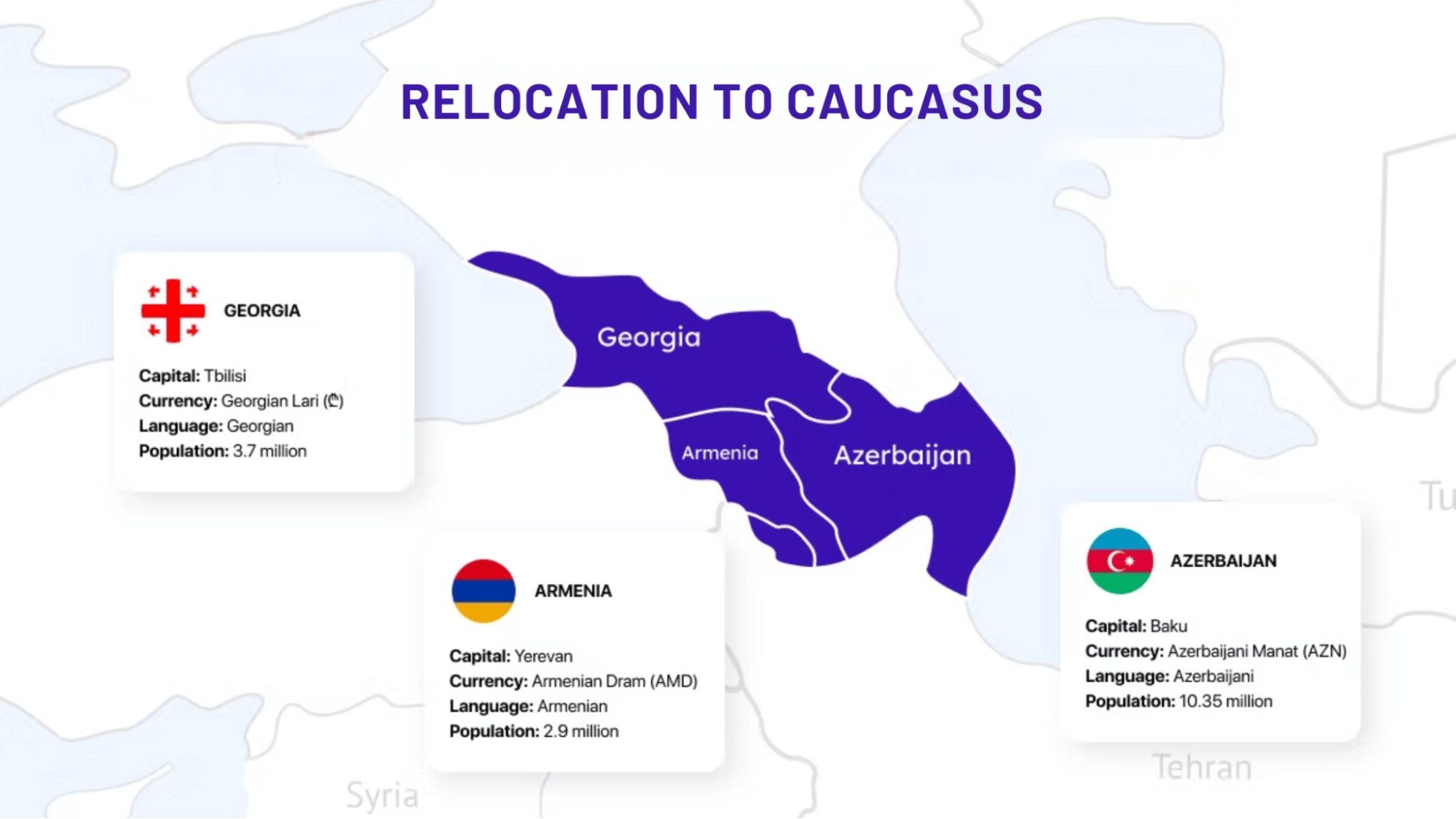
Georgia: The Transition from Liberalism to Regulated Integration

Georgia, long favored for its 365-day visa-free entry for over 95 nations, has introduced a multi-layered labor permit system that effectively ends the era of "invisible" foreign employment. The 2025 immigration reforms, which find their full operational expression in the March 1, 2026, implementation of the Special Labour Activity Permit, signal a move toward what may be termed "regulated liberalism".
The March 2026 Labor Migration Framework
Prior to 2026, Georgia lacked a formal work authorization system for most foreign nationals. This changed with the adoption of amendments to the Law on Labour Migration. The centerpiece of the 2026 regime is the Special Labour Activity Permit, which is a mandatory prerequisite for any foreign national relocating to Georgia and wants to engage in paid activity, whether as a locally hired employee, a remote freelancer, or a self-employed entrepreneur. This permit creates a sequential, two-stage administrative process: the permit must be secured first, followed by the application for a D1 Immigration Visa or a Labour Residence Permit.
The administrative burden for this permit is shared between the employer and the employee. For those entering an employment relationship with a Georgian legal entity, the employer must initiate the application, providing a signed employment contract and, critically, a justification for hiring a foreign national over a local candidate. Failure to comply with these rules by March 1, 2026, exposes both the employer and the employee to fines of 2,000 lari (~USD 740), which double for repeat violations. For existing foreign workers, a transition period exists until January 1, 2027, provided they were under an active labor contract prior to the March 1st deadline.
| Permit/Visa Category | Eligibility and Scope | Administrative Deadlines |
| Special Labour Activity Permit | Mandatory for employees, freelancers, and Individual Entrepreneurs (IE). | Must be obtained prior to residency applications. |
| Labour Residence Permit | Foreign nationals physically present in Georgia for work. | Application required within 10 days of permit approval if in-country. |
| D1 Immigration Visa | Foreign nationals outside Georgia seeking labor-based entry. | Application required within 30 days of permit approval. |
| IT-Sector Residence Permit | Specialist permit for the technology sector. | 2 years of experience and a USD 25,000 annual income are required. |
Fiscal Architecture: The Individual Entrepreneur (IE) Model
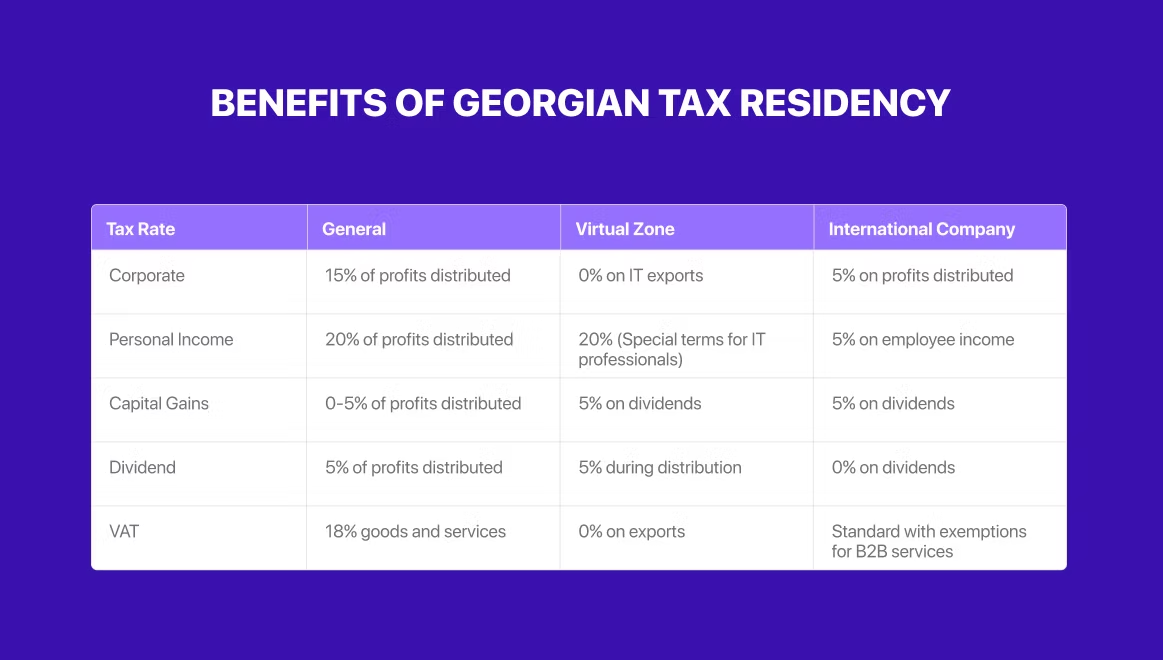
Despite the increase in labor regulations, Georgia’s tax regime for self-employed individuals remains one of the most competitive in the global market. The Individual Entrepreneur (IE) status, coupled with "Small Business Status," provides a fiscal sanctuary for digital nomads and solo founders. The registration process, typically handled at the Public Service Hall (Justice Hall), is remarkably efficient, often taking a single business day for standard processing.
The fiscal advantage is concentrated in the 1% turnover tax applied to annual revenues up to 500,000 GEL (~USD 185,000).
This regime replaces the standard 20% personal income tax and does not require complex corporate accounting.
However, certain activities are strictly excluded from this 1% regime, including legal consulting, gambling, and medical services. From a practical standpoint, the IE registration requires a valid passport, a Georgian mobile number, and a local legal address. While foreigners can register an IE without residency, the 2026 reforms mandate that if they are physically present and working in Georgia, they must supplement this status with a Labor Activity Permit.
| Tax Type | Rate | Threshold/Condition |
| Small Business Status (IE) | 1% of turnover | Annual revenue < 500,000 GEL |
| Microbusiness Status (IE) | 0% of turnover | Annual revenue < 30,000 GEL |
| Standard Income Tax | 20% flat | Applied to profit if not under special status |
| VAT (Value Added Tax) | 18% | Mandatory if 12-month turnover > 100,000 GEL |
| Dividend Tax | 5% | Standard withholding for residents |
Monitoring, Biometrics, and Enhanced Scrutiny
The 2025 amendments to the Law on Foreigners and Stateless Persons have granted the Georgian Ministry of Internal Affairs and the Ministry of Justice expanded powers for monitoring foreign nationals. Starting October 1, 2025, a centralized database tracks illegal presence, and authorities may now inspect private residences and workplaces to verify that the conditions of a residence permit are being met. Furthermore, the state has expanded its authority to collect biometric data, including finger and palm prints, during the issuance of identity documents.
For those seeking residency based on property ownership, the threshold remains centered on the investment of USD 100,000 or more in non-agricultural real estate. However, applicants are now required to submit Police Clearance Certificates (PCC) as a standard part of the background check, reflecting a pivot toward national security vetting that was previously less rigorous.
Armenia: Digital Integration and the Biometric Frontier

Armenia has historically been a highly attractive hub for technical talent, particularly due to its robust startup ecosystem and its participation in the Eurasian Economic Union (EAEU).
However, the government has recognized that the informality of Armenian immigration processes led to systemic vulnerabilities. Consequently, a major legislative overhaul is set to take full effect on August 1, 2026.
The August 2026 Immigration Overhaul
The 2026 reform is characterized by the total digitalization of the residency process via the workpermit.am platform. This system is designed to eliminate the need for physical interactions with multiple ministries, connecting employers, employees, and the State Revenue Committee (SRC) in a single digital workflow.
One of the most significant changes is the abolishment of the 10-year "Special Residence Status" (special passports). While existing special passports remain valid until their expiry, new applicants, including ethnic Armenian repatriates and major investors, will instead be issued biometric residence cards. These cards serve as both a travel document and proof of legal stay, and their issuance requires the applicant's personal presence in Armenia for biometric enrollment.
A critical procedural change for foreign workers is the introduction of a mandatory entry work visa. Previously, it was common for foreigners to relocate to Armenia on tourist visas or under visa-free regimes and then transition to a work-based Temporary Residence Permit (TRP). After August 2026, this transition will be barred for most categories; individuals must enter on a specific work visa (Type D), valid for up to 120 days, to be eligible for a subsequent TRP.
| Status Type | Duration | 2026 Implementation Changes |
| Temporary Residence (TRP) | 1 Year | Renewed annually; tied to a specific employer. |
| Permanent Residence (PRP) | 5 Years | Requires prior TRP or "exceptional service" status. |
| Certificate of Legal Stay | Varies | New mandatory status for EAEU workers; 30,000 AMD fee. |
| Entry Work Visa | 120 Days | New mandatory prerequisite for TRP applications. |
Labor Market Quotas and the End of the Market Test
In a move that balances regulatory control with economic pragmatism, Armenia is abolishing the "Labor Market Test". This mechanism, which required employers to post vacancies on a state portal and prove that no local candidates were suitable, was found to be almost entirely ineffective, with only 0.05% of applications resulting in a local hire between 2022 and 2025.
In its place, the Armenian government is introducing an annual state-level quota system for foreign workers. These quotas will be set based on industry needs and professional categories, providing the state with a lever to manage migration volumes without the bureaucratic friction of case-by-case vacancy testing. Additionally, the reform simplifies the process for workers to change employers; while they no longer need to cancel their TRP, they must notify the migration authorities within 15 working days and submit the new employment contract through the digital portal.
Payroll Compliance and Social Contributions
Armenia’s fiscal system for employment is characterized by a flat 20% income tax rate, but the total payroll cost is influenced by mandatory pension and social payments. For employers, it is vital to note that there is no separate employer-paid social security tax in the private sector; all contributions are withheld from the employee’s gross salary.
| Deduction Category | Rate / Calculation | Base Salary Condition |
| Income Tax | 20% flat | Applied to all gross income |
| Pension (Level 1) | 5% | Salaries up to 500,000 AMD |
| Pension (Level 2) | 10% minus 25,000 AMD | Salaries 500,001 to 1,125,000 AMD |
| Pension Cap | 87,500 AMD monthly | Applied to salaries > 1,125,000 AMD |
| Military Stamp Duty | 1,500 to 15,000 AMD | Tiered based on salary brackets |
For those in the high-technology sector, significant incentives remain. Armenia offers a 60% reimbursement of the income tax paid for professionals in the tech sector, a policy extending through 2031. This incentive is particularly relevant for relocations of engineering teams, as it effectively reduces the net tax burden on senior talent.
Azerbaijan: Strategic Regulation and the Fiscal Realignment

Azerbaijan operates as the most security-conscious and centralized of the Transcaucasian states. Its relocation framework is defined by the ASAN (Easy) service model, which streamlines interactions with the State Migration Service but requires strict adherence to notification timelines.
The 15-Day Rule and ASAN Service Integration
The most critical practical step for any foreigner arriving in Azerbaijan is the "Registration upon Place of Stay". Any foreign national staying in the country for more than 15 days (30 days for Kazakhstani citizens) must register their address with the State Migration Service. This registration is free but mandatory; failure to comply results in administrative fines ranging from 300 to 400 AZN (~USD 175-235) and can lead to a ban on future entry.
The registration must be completed within the first 15 calendar days of arrival. While hotels usually handle this for tourists, individuals renting apartments or staying with friends must ensure their landlord submits the registration via the mygov.az platform or in person at an ASAN Xidmet center. Crucially, if a foreigner changes their address during their stay, they must re-register the new location within five working days.
2026 Fiscal Reform: The End of the Tax Holiday
A definitive shift in Azerbaijan’s economic strategy occurs on January 1, 2026, with the expiration of the long-term personal income tax holiday for private sector employees in the non-oil/gas sector. For the past several years, these employees enjoyed significant tax exemptions; however, 2026 introduces a permanent progressive tax regime.
This model is designed to keep the tax burden low for entry-level workers while generating state revenue from middle and high-income professionals. To mitigate the impact on corporate budgets, the government has simultaneously introduced reduced social and health insurance rates for high earners.
| Monthly Income Bracket | Income Tax Rate (2026) | Mandatory Health Insurance Rate |
| Up to 2,500 AZN | 3% | 2% on first 2,500 + 0.5% on excess |
| 2,501 – 8,000 AZN | 75 AZN + 10% on excess | 0.5% (Employee) + 0.5% (Employer) |
| Above 8,000 AZN | 625 AZN + 14% on excess | 0.5% (Employee) + 0.5% (Employer) |
For 2027 and 2028, the 3% base rate is scheduled to increase to 5% and 7%, respectively, necessitating long-term payroll planning for companies establishing a permanent presence in Baku. Employers in specific strategic zones, such as the Nakhchivan Autonomous Republic or liberated territories, may qualify for state subsidies covering up to 100% of social insurance contributions, a significant incentive for regional industrial relocation.
Residency by Investment and Property Ownership
Azerbaijan does not offer a formal citizenship-by-investment program, but it provides a "Golden Visa" equivalent through its temporary residence permit (TRP) pathways. The State Migration Service issues these permits based on documented economic activity or assets.
- Direct Investment: A minimum contribution of 500,000 AZN (~USD 294,000) into the Azerbaijani economy grants a three-year TRP.
- Real Estate: Ownership of property worth at least 100,000 AZN (~USD 59,000) allows for a one-year renewable TRP.
- Bank Deposits: A term deposit of at least 100,000 AZN in a local bank for a minimum of one year serves as a basis for residency.
- Entrepreneurship: Establishing a company with at least five local full-time employees (or 10 part-time, 80% of whom must be Azerbaijani citizens) provides a legal ground for residency.
Permanent residency (PRP) is achievable after two years of continuous stay under a TRP, provided the applicant has not abandoned the grounds for residency (e.g., maintaining the deposit or property). PRP holders must notify the authorities if they plan to be absent from the country for more than 183 days in a year, or risk cancellation of their status.
Operational Comparison: Entity Setup versus Employer of Record (EOR)
For foreign enterprises, the primary operational decision is between setting up a local entity or using an Employer of Record (EOR) service. The 2026 regulatory environment in the Caucasus has made the EOR model particularly relevant for risk mitigation.
The EOR Model: Rapid Market Entry

An EOR provider acts as the legal employer for tax and labor purposes while the foreign company retains operational control. This model is ideal for companies testing the market or hiring small teams of developers. In Azerbaijan, where misclassification of contractors can lead to fines of USD 882 per employee and potential litigation from the State Tax Service, the EOR provides a compliance buffer.
| Feature | Local Entity Setup | Employer of Record (EOR) |
| Onboarding Time | 3 – 7 Weeks | 1 – 5 Days |
| Initial Costs | USD 2,000 – 5,000 (Armenia) | Monthly service fee (USD 300 – 800) |
| Legal Risk | Full liability for labor disputes | EOR assumes legal employer liability |
| Compliance | Requires a local accountant/HR | Managed by the EOR platform |
| Banking | Requires a local corporate account | Handled through EOR's infrastructure |
Regional providers like Team Up offer flat-rate pricing (e.g., €199/month per employee), which avoids the unpredictability of percentage-based fees favored by global platforms. This is particularly advantageous in the Caucasus, where salary fluctuations and exchange rate volatility can make percentage-based models significantly more expensive over time.
Banking Solutions and KYC Rigor
Financial onboarding remains one of the most significant hurdles for relocated individuals and firms. While Georgia and Armenia are relatively accessible, Azerbaijan’s Central Bank regulations strictly prohibit non-residents without a residence permit from opening bank accounts or obtaining cards.
- Georgia: Bank of Georgia and TBC Bank are the market leaders for expats. Opening a personal account requires a passport, a local address (rental agreement), and a KYC questionnaire. The Bank of Georgia’s "SOLO" and "Wealth" divisions provide premium services for high-net-worth individuals, including 24/7 instant external transfers.
- Armenia: Opening an account requires an Armenian SIM card, a passport, and ideally, an Armenian Social Services Number (SSN). Banks like ID Bank and Ameriabank conduct face-to-face KYC interviews to confirm the source of funds and intended turnover. Remote account opening via Power of Attorney is possible but requires apostilled and translated documentation.
- Azerbaijan: Non-residents must first obtain a TRP card from the State Migration Service. Once secured, Kapital Bank and VTB Azerbaijan offer international-standard products, including the "Birbank" cashback and miles cards.
The Human Capital Landscape: Recruitment and Cultural Intelligence
The success of a relocation project in the South Caucasus is as much about cultural integration as it is about legal compliance. The region’s tech talent pool is expanding, but it remains niche and relationship-driven.
Tech Talent and Recruitment Trends 2026
Armenia currently holds the most mature tech ecosystem, with several "home-grown" companies reaching Series B and C funding (e.g., Picsart, Krisp). This has fostered a global mindset among Armenian founders and engineers, many of whom have strong ties to Silicon Valley. In Georgia, the startup scene is in an earlier stage, with a focus on FinTech and EdTech, but it benefits from strong government support through the Georgia Innovation and Technology Agency (GITA). Azerbaijan is carving a niche in "digital backbone" infrastructure and logistics tech, acting as a bridge between Europe and Central Asia.
Recruitment in 2026 is increasingly focused on high-level soft skills and "AI fluency". Employers are prioritizing candidates who can bridge the gap between technical development and business objectives. In terms of compensation, while local salaries are lower than in the US or EU, they are rising rapidly for specialized roles in cybersecurity, data science, and AI.
| Role (Mid-Level) | Projected 2026 Salary Range (Baku/Tbilisi Est.) | US/Global Benchmark (2026) |
| AI Engineer | USD 2,500 – 4,500 | USD 167,000+ |
| Data Scientist | USD 2,000 – 3,500 | USD 150,000+ |
| Cybersecurity Eng. | USD 2,500 – 4,000 | USD 192,000+ |
| Full Stack Dev | USD 1,800 – 3,200 | USD 130,000+ |
Cultural Nuances in Communication and Negotiation
Western founders moving to the Caucasus often encounter a "high-context" communication style where much of the meaning is embedded in non-verbal cues and personal relationships. In Azerbaijan, hierarchy is strictly respected; direct challenges to a superior are rare and can be perceived as an affront to authority. This often leads to a top-down management style where subordinates may not offer input unless specifically invited.
Negotiations in the region are relationship-driven and often move at a slower pace than in the West. Building "Guanxi"-like personal connections over meals and social gatherings is paramount. In Azerbaijan, hospitality is a core value, and rejecting refreshments or an invitation to a meal can damage trust early in a negotiation. Founders should expect a degree of "haggling" even in professional service contracts and should remain patient, as rushing a decision is often counterproductive.
Practical Logistics: Housing and Cost of Living
The cost of living across the Caucasus remains a primary driver for relocation, though prices in Baku, Tbilisi, and Yerevan have converged with Eastern European averages as of 2026.
Neighborhood Analysis and Housing Strategies
In Baku, the central Sabayil district is the most expensive, offering proximity to the "Old City" and the Boulevard, with average apartment prices reaching USD 314 per night for short-term rentals. For long-term expats, the Nasimi and Khatai districts provide modern, high-rise luxury apartments with amenities like fitness centers and spas at a lower price point.
| City | Preferred Expat Neighborhoods | Monthly Rent (1-BR Center) | Monthly Rent (1-BR Suburban) |
| Baku | Sabayil, Nasimi, Khatai | 675 AZN (~USD 400) | 400 AZN (~USD 235) |
| Tbilisi | Vake, Vera, Saburtalo | USD 500 – 850 | USD 300 – 500 |
| Yerevan | Kentron, Arabkir | USD 600 – 950 | USD 400 – 650 |
Utility costs in Azerbaijan are remarkably low due to domestic energy production, with basic services for a 900 sq ft apartment averaging 98 AZN (~USD 58) per month. In contrast, internet and mobile data costs are competitive, with high-speed plans averaging 24 AZN (~USD 14) monthly.
Practical Relocation Checklist 2026
For a successful relocation, a specific sequence of actions is recommended to ensure legal and operational continuity:
- Pre-Arrival Document Preparation: Secure Police Clearance Certificates (PCC), apostilled diplomas, and notarized translations of marriage/birth certificates.
- Entry Strategy: Check citizenship against the 2026 visa requirements. For Georgia, ensure entry with a D1 visa if the Special Labour Activity Permit is approved abroad. For Armenia, enter on a Type D work visa.
- Registration: Within the first 15 days in Azerbaijan, ensure the landlord registers the stay at the place of residence via ASAN.
- Local Identity: Obtain a local SIM card and a local tax ID (IE in Georgia, SSN in Armenia) to unlock banking and digital services.
- Employment Formalization: Sign bilingual employment contracts and register them with the relevant national agencies (Ministry of Labor in Georgia, SRC in Armenia).
Strategic Recommendations
The South Caucasus in 2026 offers a sophisticated, if increasingly regulated, frontier for international relocation. The shift toward institutionalization, exemplified by Georgia’s labor permits, Armenia’s biometric digitalization, and Azerbaijan’s progressive tax realignment, significantly reduces the "grey area" risks that previously categorized the region.
For organizations, the primary strategic recommendation is the adoption of a hybrid operational model: utilize an EOR for the rapid onboarding of the first 5-10 employees to navigate the 2026 permit cycles, while concurrently preparing for the establishment of a local entity if a long-term presence is desired. For individuals, the focus must be on administrative timeliness; the 15-day registration rule in Azerbaijan and the 10-day residency application window in Georgia are rigid and strictly enforced.
Ultimately, the region’s lower cost of living, favorable tax regimes for small businesses, and strategic position as a global tech corridor continue to outweigh the increased regulatory burden, provided that relocation is approached with meticulous legal planning and cultural sensitivity.

Frequently Asked Questions
1. What is the most significant regional change for employers in 2026?
The end of the "informal work" era. Historically, Georgia allowed foreigners to work on visa-free entry, and Armenia was flexible with paper contracts. As of 2026, all three countries now require a formal Work Permit or specialized registration prior to or immediately upon starting work, with digitalization (portals like migration.enbek.kz or my.mehnat.uz) being the only way to stay compliant.
2. Is "Labor Market Testing" mandatory across the Caucasus?
Yes, but the rigor varies:
- Georgia: As of March 1, 2026, employers must post vacancies on a state portal for 5 days to see if a local candidate is available before hiring a foreigner.
- Armenia: Uses a digital portal (workpermit.am) for labor testing.
- Azerbaijan: Has the strictest test, requiring a formal justification to the State Migration Service if a local is rejected.
3. Are there unified visas or work permits for the whole region?
No. Despite their proximity, the "Caucasus" is not a single legal bloc like the EU. An employee with a residency permit in Georgia has no right to work in Armenia or Azerbaijan. Employers must manage separate legal entities or local compliance for each specific country.
4. How have "Digital Signatures" changed hiring in 2026?
In Armenia, as of January 1, 2026, all employment contracts must be signed using a local digital signature. Paper contracts are no longer legally recognized for new hires. Georgia and Azerbaijan have also moved toward mandatory electronic registration of all labor agreements in state databases.
5. What is the "50,000 GEL" rule in Georgia for 2026?
To sponsor a foreign employee’s residency, a Georgian company must now show an annual turnover of at least 50,000 GEL per foreign staff member. This is designed to prevent small "shell" companies from being used solely for immigration purposes.
6. Can I still hire Russians, Ukrainians, or Belarusians easily?
While these nationalities flocked to the region in 2022–2024, 2026 brings stricter oversight. In Georgia, the transition period for these "long-term visitors" ends on January 1, 2027. Employers must ensure these staff members obtain the new Special Labour Activity Permit by then, or face heavy fines.
7. What are the penalties for non-compliance in 2026?
Penalties have been standardized upward:
- Georgia: 2,000 GEL per illegal worker for both the employer and employee.
- Azerbaijan: Extremely high fines (up to 35,000 AZN) for unauthorized foreign labor.
- Armenia: Fines starting at 600,000 AMD for failing to register e-contracts.
8. Which country offers the best tax incentives for tech employers?
Uzbekistan and Georgia remain the leaders. Uzbekistan's IT Park residents pay 0% Corporate Tax and a reduced 7.5% PIT in 2026. Georgia's "Virtual Zone" or "International Company" status offers similar Corporate Tax exemptions (0–5%) for tech exporters.
9. Do I need to provide local health insurance for relocates?
As of January 1, 2026, it is practically mandatory. Georgia requires all foreign visitors to have health and accident insurance (minimum 30,000 GEL coverage). For employers, providing a local corporate policy is now a standard prerequisite for securing any work-based residency permit in the region.
10. Can I use an "Employer of Record" (EOR) in the Caucasus?
Yes, EOR services are the most popular solution in 2026 for companies that want to avoid the administrative burden of the new laws. An EOR handles the local digital signatures, the labor market testing, and the 2026 tax updates, allowing you to hire in Tbilisi, Yerevan, or Baku without a local office.
.svg)