Employee benefits, insurance & workspace: what EORs provide in Armenia

Introduction
Hiring in Armenia is easy, until you try to offer benefits that don’t feel like an afterthought.
You found the developer. You agreed on the salary.
Now they’re asking about paid leave, health insurance, maybe even a coworking space.
You want to say yes. But… who’s writing the local contracts? Who’s managing payroll? Who’s coordinating delivery of a laptop to Yerevan next Tuesday?
You don’t have an HR team in Armenia.
You don’t want one.
You just want your new hire to feel like a real employee, not a loose contractor floating in legal limbo.
That’s exactly what an Employer of Record (EOR) solves.
It’s not just payroll and compliance.
A good EOR becomes your entire HR stack in Armenia handling:
- Legal benefits like vacation days, social fund contributions, and sick leave
- Optional perks like health insurance or internet stipends
- Workspace setups, whether home office or coworking
- Equipment logistics, from sourcing to delivery
And it all runs in the background. One invoice. No mess.
In this article, we’ll break down what a full employee support package actually looks like when remote hiring in Armenia via EOR, and why the right setup doesn’t just keep you compliant. It keeps your team happy, loyal, and ready to work.
What benefits are legally required in Armenia?
Hiring in Armenia? Then you’re also hiring into Armenia’s labor law—whether you mean to or not.
And no, you can’t just Venmo your new hire a paycheck and call it a day.
Let’s break down what you actually owe employees under Armenian law. These aren’t optional. These aren’t “nice-to-haves.” These are must-haves if you want to stay compliant and build real trust with your team.
Paid annual leave
Armenian law guarantees a minimum of 20 working days of paid vacation per year.
Not calendar days. Not “take it or lose it.” Actual, contract-backed, employee-earned time off.
And if your employee doesn’t get it? You’re the one in violation.
Paid public holidays
There are official state holidays and no, you can’t ask your backend dev to “make up for it on Sunday.”
Employers must provide paid leave on all national holidays. These change year to year, but they’re mandatory.
Sick leave
Sick? Doctor’s note in hand? Your employee is entitled to paid time off.
The amount depends on seniority and the illness, but it’s generally covered by social fund contributions and partially reimbursed.
That means the government helps, but you’re responsible for handling it right.
Maternity leave
Armenia is no slouch on this front.
Female employees are entitled to 140 days of paid maternity leave (70 before birth, 70 after).
This can extend up to 155 or 180 days for complicated births or twins.
And if you don’t know how to file the paperwork properly? Expect problems.
Parental leave
New dads? They’re entitled to 5 days of paid leave within the first 30 days of the child’s birth.
There’s also extended parental leave options for childcare, but again, legal compliance in Armenia is key.
Social fund & pension contributions
Employers are legally required to contribute to Armenia’s state social security system, which funds:
- Pensions
- Temporary disability
- Maternity benefits
- And more
Contribution rates change, but expect a fixed percentage of employee wages.
Skip this and you’re not just non-compliant, you’re also robbing your employees of future support.
Minimum wage & work hours
The standard workweek? 40 hours over 5 days.
Pay below the national minimum wage or fail to compensate overtime correctly? That’s a violation, and a fast way to lose talent and gain fines.
Termination rules & severance
Armenian labor law has strict rules around:
- Notice periods
- Termination reasons
- Severance obligations
Firing someone without following procedure can land you in court fast.
How does armenia treat free goods or services transferred from the employer to the Employee?
In Armenia, if you hand over goods or services to an employee without charging them, it's considered part of their salary, plain and simple.
The fair market value gets added to their taxable income and is taxed at the standard 20% flat personal income tax rate.
Here’s how it works:
- Free goods or services = taxable benefit: Think personal-use cars, rent-free housing, or any perk where the employee pays nothing.
- You handle the tax: Employers must report the value in payroll and withhold income tax, just like they would for regular salary.
- Some exceptions? Sure, certain insurance benefits or benefits from non-commercial orgs may be exempt, but those are the edge cases.
- No fuzzy math allowed: Armenian tax law expects benefits and wages to be combined and taxed as one total amount.
So, if you're offering extras, document them, value them properly, and make sure your payroll accounts for them. Or you’ll be the one picking up the tab later.
Free perks? Still taxable in Armenia.
In Armenia, if you give an employee something for free, be it a car, an apartment, or even a gym membership, that’s not just a nice gesture. It’s taxable income.
Here’s how it works:
- Free goods and services = salary: Anything your employee receives without paying fair market value gets added to their gross taxable income.
- Flat 20% income tax applies: Just like with regular salary, you’ll need to withhold 20% tax and handle all the reporting.
- Payroll must reflect it: These perks need to be documented and declared in your payroll calculations. If it’s not in the system, it’s not compliant.
- Few carveouts exist: There may be exemptions for specific insurance types or benefits from non-commercial organizations, but these are rare exceptions, not the rule.
So, if your team in Yerevan is enjoying free services on the company dime, make sure you’re treating those as real compensation. Because the tax office definitely will.
What counts as a “free benefit” under Armenian tax law?
In Armenia, it’s not the gift that matters; it’s whether your employee paid for it.
Here’s the simple test tax authorities use:
- Was the good or service provided by the employer?
- Did the employee pay the full market price for it?
If the answer is no, it’s a taxable benefit.
Whether it’s a free apartment, company car for personal use, or even a mobile plan, if the employee gets it for free or at a discount, the difference between what they paid and the market value gets taxed just like salary.
Employers are on the hook to:
- Document the benefit’s fair value
- Add it to the employee’s gross taxable income
- Withhold 20% personal income tax
Armenian tax law doesn’t play games with fringe perks. If it looks like income, smells like income, and your team didn’t pay for it, it gets taxed like income.
Unless it’s explicitly exempt (and very few things are), you need to treat it as part of payroll.
Health insurance and optional perks

Private health insurance isn’t legally required in Armenia. But here’s the catch: if you want to hire mid-level or senior talent, they’ll expect it anyway.
That’s the local norm, especially for competitive tech, engineering, and finance roles. And skipping it? That signals you’re not serious about building a long-term team.
So, is private health insurance mandatory?
Legally? No.
Practically? Yes, if you’re hiring talent with options.
Most senior professionals in Armenia look for roles that include:
- Private health insurance (often covering dental/vision)
- Mental health support or telehealth access
- Coverage for dependents
If you don’t offer this, they’ll happily take an offer from a company that does.
What other perks are common?
Armenian remote employees aren’t asking for kombucha on tap.
But they are expecting smart support that makes remote work… work.
Here’s what EOR-managed employees often receive:
- Phone & internet stipends (especially if working from home)
- Professional development budgets (courses, conferences, language lessons)
- Gym or wellness stipends
- Laptop and accessory reimbursements
- Flexible hours or asynchronous schedules
They’re not outrageous perks, they’re baseline signals of employer respect.
Local vs global expectations
Here’s the thing: what’s considered “standard” in San Francisco might feel extravagant in Yerevan, and vice versa.
An EOR in Armenia helps you walk that line, customizing benefits that feel fair, relevant, and competitive for Armenia without overextending your budget.
You don’t want to be the employer who underdelivers and drives churn.
But you also don’t want to be the company throwing in perks no one asked for.
How EORs make this easier
EOR provider in Armenia, like Team Up, acts as your benefits architect.
We help you:
- Benchmark expectations in Armenia
- Structure benefit packages around role type, budget, and seniority
- Administer everything legally, including contracts, receipts, and filings
- Keep you compliant if the tax treatment on a perk changes
Offering a solid benefits package doesn’t mean building an HR team from scratch.
With the right EOR, it’s already built for you.
Workspace support for remote employees in Armenia
Most EOR hires in Armenia don’t go into an office.
They don’t want to.
And honestly, you don’t need them to.
Do EOR hires work remotely in Armenia?
Yes.
Especially in tech, design, marketing, and finance, remote is the norm, not the exception.
The biggest hubs for remote talent are:
- Yerevan (the capital and tech nucleus)
- Gyumri (Armenia’s second city with a growing IT scene)
- Vanadzor (increasingly popular for remote workers with lower living costs)
So the question isn’t if your employees work remotely.
It’s how you support that setup without creating a logistical mess.
What are the most common workspace options?
- Home office stipend: For roles with full work-from-home setups, employers often offer:
- Monthly internet support (€20–€30)
- Electricity stipend in the winter months
- Ergonomic chair or desk reimbursements
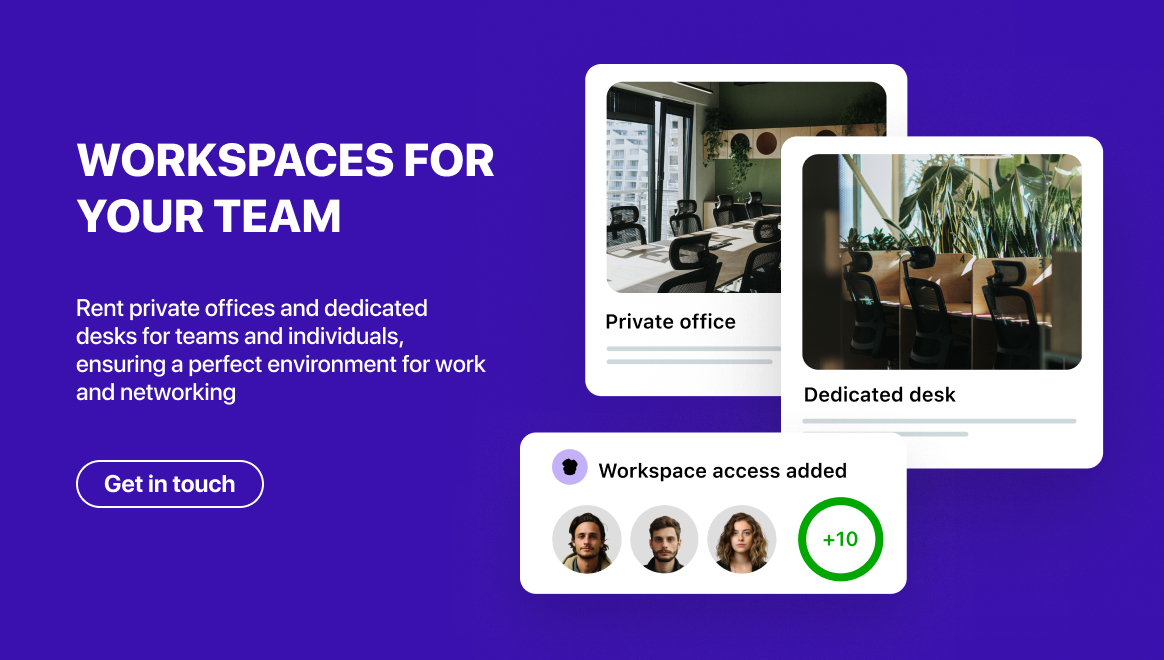
- Coworking membership: This is common for hybrid or client-facing roles. Popular spaces in Yerevan include:
- Impact Hub Yerevan
- LOFT
- Hero House
Cost: €80–€180/month, depending on the city and package (hot desk vs private office).
- Private or shared office spaces: Rare, but if you're building a mini-team in Armenia, a shared office may make sense. You’ll still avoid the cost and red tape of registering a legal entity.
How Team Up handles workspace support
Team Up streamlines workspace perks through:
- Fixed monthly stipends added to the payroll
- Coworking memberships are managed under our local legal contracts
- Transparent expense handling for equipment and furniture
No receipt chasing. No surprise deductions.

Who provides equipment and tools?
Hiring someone in Armenia is one thing. Getting them a laptop that doesn’t look like it came from the Cold War? That’s another.
Let’s talk logistics.
What equipment are we talking about?
It’s not rocket science, but it does need to work.
Here’s what most remote employees in Armenia expect:
- Laptop (MacBook, Lenovo, Dell — pick your religion)
- Accessories (mouse, keyboard, headset, webcam)
- Software (licensed tools, VPN, collaboration apps)
If you're hiring a developer and they’re waiting 3 weeks for access to their IDE, you’re already behind.
Who handles the logistics?
Short answer: It depends.
Slightly longer answer:
- Some companies ship directly from their HQ. That works if you have global logistics down to a science (and don’t mind customs paperwork in Armenian).
- Others reimburse employees for local purchases. Great for speed. Slightly riskier for standardization.
- With an EOR like Team Up, we offer both centralized provisioning or vetted local procurement via trusted partners.
You decide what makes sense for your ops.
Reimbursement vs centralized logistics
Reimbursement = fast, flexible, no headaches, until someone submits a receipt for a pink gaming laptop with RGB lights and an anime wallpaper.
Centralized = more control, standardized devices, smoother IT onboarding, but shipping delays and customs risk are real.
We help you balance speed, control, and sanity.
How fast is onboarding?
With Team Up, most equipment setups are complete within 7–10 business days of contract signature.
Here’s how it typically flows:
- Contract signed
- Role confirmed
- Equipment sourced (either shipped or reimbursed)
- Employee onboarded with all tools in hand
Because “I didn’t have a laptop” isn’t an excuse, it’s a sign your setup is broken.
Why benefits & workspace matter for retention
You can hire the best engineer in Yerevan.
Pay above-market. Throw in equity.
But if they’re working off a dying laptop, chasing reimbursements through email chains, and Googling whether they’re actually an employee, don’t expect them to stick around.
The setupisthe signal.
Workspace. Equipment. Paid time off.
These aren’t just line items.
They’re proof.
Proof that you’re serious.
Proof that the offer isn’t just words.
Proof that your company treats remote talent like real team members, not afterthoughts.
And when people feel like real employees?
They act like it. They stay.
Smart companies compete with benefits.
Global hiring isn’t new.
But the bar is getting higher.
Top companies offer private health plans, monthly stipends for wellness or learning, actual onboarding (not “hey, here’s your Slack invite”), and dedicated HR support.
It’s not about being generous.
It’s about staying competitive.
What your offer looks like with Team Up
Let’s get specific:
Without EOR
- Delayed contracts
- No local benefits
- No HR point of contact
- Employee pays for coworking
- Salary paid late, in wrong currency
With Team Up’s EOR in Armenia
- Legally compliant employment from day one
- Paid leave, health insurance, maternity/paternity covered
- Workspace stipend or access to coworking hubs
- Local currency salary, paid on time, with payslips
- HR onboarding, equipment sourcing, and ongoing support
So when your candidate compares offers, yours feels solid. Not just on comp, but on structure, too.
That’s what retention starts with. Not a ping-pong table, but a contract that makes them feel secure.
Final comparison: EOR vs building it all yourself
Let’s be honest, if you’ve got a legal team, payroll department, and an HR lead fluent in Armenian labor law, go ahead and skip the EOR VS setting up the entity in Armenia part.
For everyone else: here’s the real math.
Building it yourself? Expensive, slow, risky.
- Cost: Company setup fees, accounting retainers, legal counsel, local HR hire, payroll software, insurance providers, etc.
- Speed: Expect months to register, longer to hire, and delays on every contract approval or government form.
- Compliance: You’re liable. For everything. Labor law mistakes, tax filings, benefit missteps, your problem now.
And what do you get in return?
Control, yes, but only after you’ve built the entire machine from scratch.
EOR model? Lean, fast, covered.
- Cost: Flat fee, no hidden headaches.
- Speed: Hire in Armenia in days, not months.
- Compliance: Fully local contracts, tax filings, and benefits handled by experts who do this for a living.
You get all the infrastructure of a real employer, without having to become one.
And no, it doesn’t mean giving up control.
You still run your team. We just make it legal and frictionless.
When should you build?
Let’s not be dogmatic. There’s a time to scale in-house.
- You’re hiring dozens in Armenia.
- You want full IP ownership under your own legal entity.
- You’ve got a local HR/legal/payroll stack already in place.
Otherwise?
Stay lean. Stay compliant. Stay fast.
Team Up’s EOR model was built for companies who want to focus on their product, not Armenian payroll law.

Conclusion
Hiring someone in Armenia shouldn’t feel like assembling IKEA furniture without the instructions, only in a language you don’t speak, with missing screws, and the real risk of fines if you get it wrong.
A good EOR doesn’t just help you hire.
It helps you build a complete employee experience that actually works, on day one and every day after.
- Real contracts in Armenian and English
- Paid leave, benefits, and insurance that match local expectations
- Coworking access or home office stipends
- Laptop delivery before the first standup
- HR questions answered without pinging your lawyer
This isn’t a workaround.
It’s what full employment should look like without the bloat.
.svg)