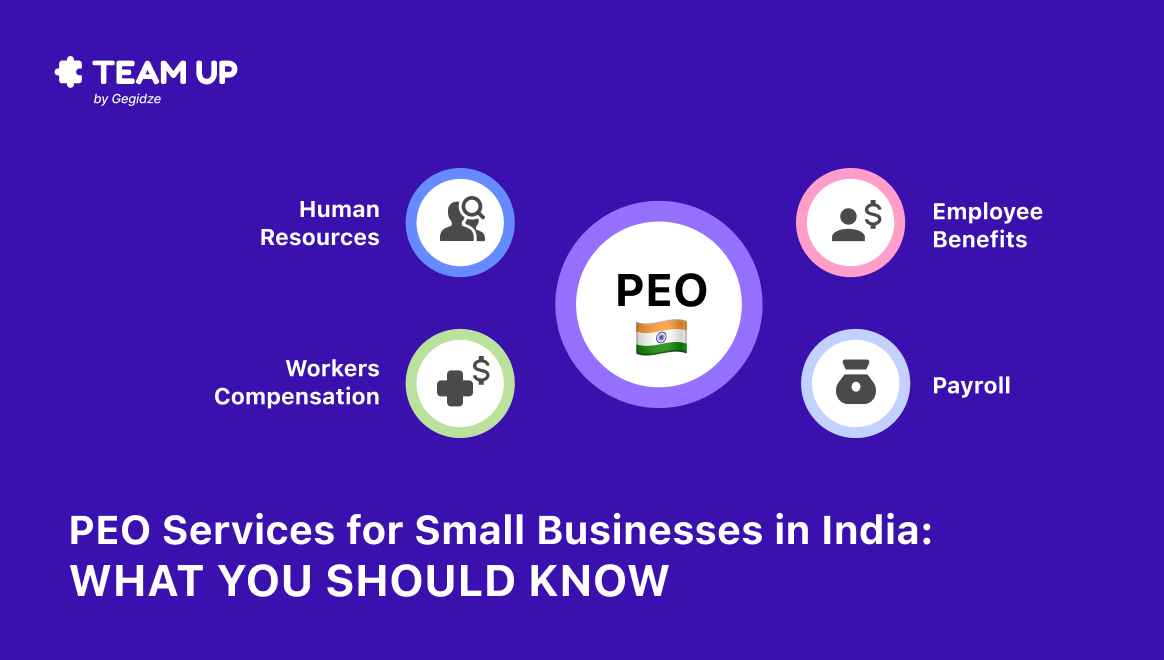
PEO services for small businesses in India: What you should know
Introduction
Hiring in India is exciting until you try to run payroll for the first time.
Suddenly, you are drowning in PF, ESI, PT, TDS, Form 16, and a sea of portals that all seem designed to punish anyone who tries to learn them on a Monday morning.
That is when founders start Googling PEO services for small businesses in India.
Not because they are desperate to outsource HR, but because they are tired of feeling one compliance slip away from a legal fire drill.
India is a powerhouse talent market. But it is also a maze of state-specific labour laws, mandatory contributions, tightly monitored digital filings, and documentation rules that do not forgive “I didn’t know.”
A PEO promises to take that mess off your plate. The trick is knowing what a PEO actually does here, what it definitely does not do, and whether it fits the way your business is expanding into India.
Let’s walk through the reality.
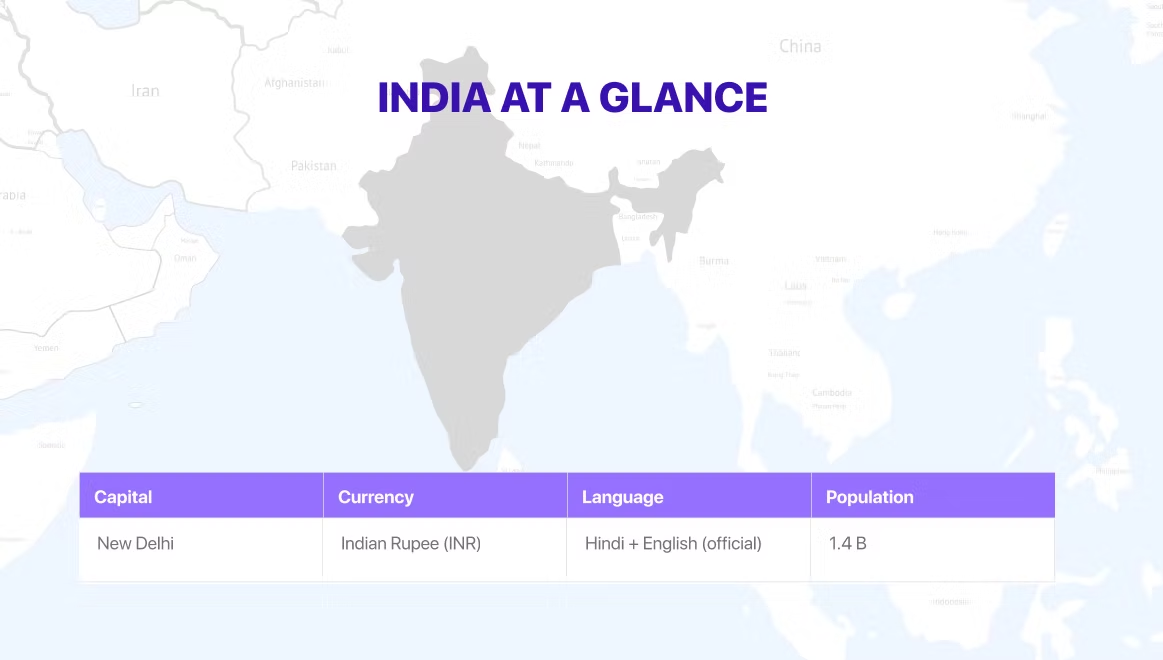
Why Small Businesses Turn to PEO Services in India
No founder wakes up thrilled to outsource payroll. They turn to PEOs for one reason. India’s compliance system is not beginner-friendly. It is barely friendly for people who have lived inside it for ten years.
Here are the real triggers, the ones founders only admit quietly.
Payroll Complexity That Hits You Out of Nowhere
Payroll in India is not “salary goes in, tax comes out.” It is a layered, multi-rule calculation involving:
- TDS (Income Tax Deduction at Source)
- You calculate tax monthly, but slabs work annually. That means payroll changes mid-year require recalculations.
- PF (Provident Fund)
- Mandatory retirement contribution.
- Employee: 12%.
- Employer: 12%.
- But only on Basic Wage, unless voluntary PF kicks in.
- ESI (Employee State Insurance)
- Mandatory for salaries below INR 21,000.
- Employee: 0.75%.
- Employer: 3.25%.
- Professional Tax (PT)
- State-specific.
- Maharashtra ≠ Karnataka ≠ West Bengal.
- Labour Welfare Fund (LWF)
- State-specific again. Small, but mandatory.
Most small businesses realise quickly that one payroll error can cascade into PF penalties, TDS notices, or ESIC challan mismatches.

State-Level Labour Laws Make Everything Harder
India does not operate on one unified labour system.
Your compliance obligations change if your employee is in:
- Karnataka
- Tamil Nadu
- Maharashtra
- Telangana
- Delhi NCR
Each state has its own Shops & Establishments Act, its own leave rules, its own documentation requirements, and its own inspectors.
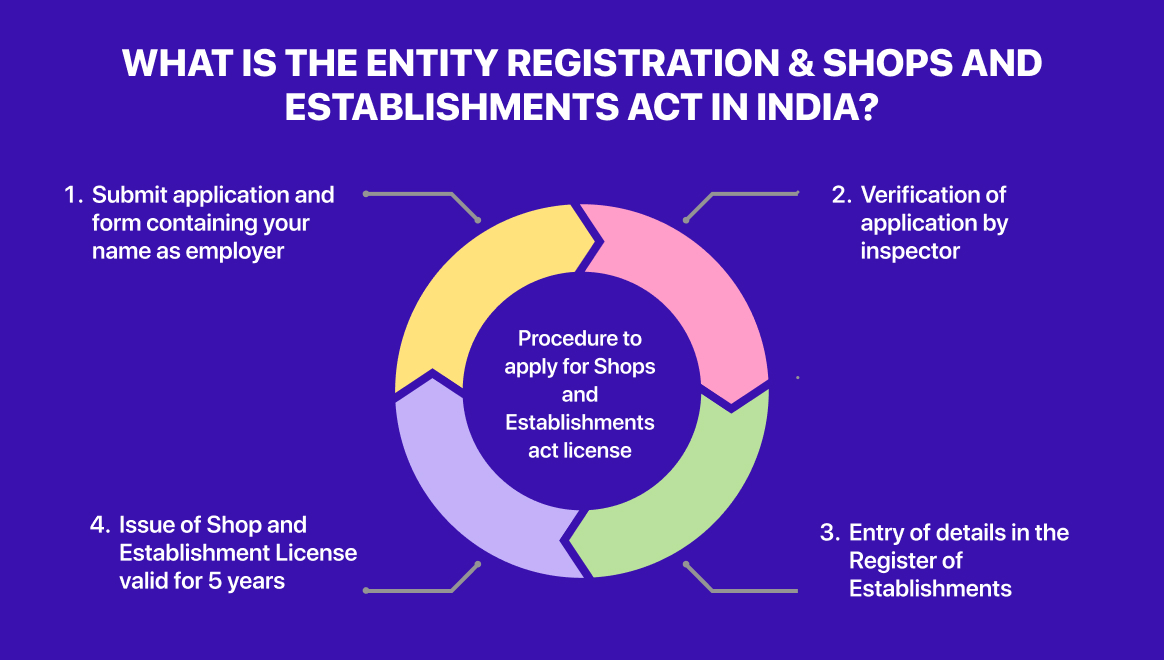
A PEO helps unify that mess so your internal team does not need a map of every state’s labour ecosystem.
Mandatory HR Documentation Is Not Optional
India requires a legally compliant:
- appointment letters
- standing orders (in some states)
- leave registers
- wage registers
- attendance records
- termination documentation
- compliance displays
Most global founders do not even know these documents exist until they receive a notice asking for them.
Digital Compliance Is Heavy and Non-negotiable
PEOs in India handle filings through:
- EPFO (PF portal)
- ESIC portal
- Income Tax portal
- Shram Suvidha unified labour portal
- state-specific compliance portals
Missing deadlines = penalties.
Mismatched data = inspections.
This alone is enough reason for a PEO.
HR Talent Is Expensive and Rarely Multi-State Ready
Hiring a payroll or compliance manager who understands:
- PF
- ESI
- LWF
- PT
- TDS
- labour compliance
- state laws
Is expensive. SMEs can rarely justify it.
A PEO gives you compliance capacity without full-time headcount.
What PEO services in India mean (Minus the Nice Marketing Words)
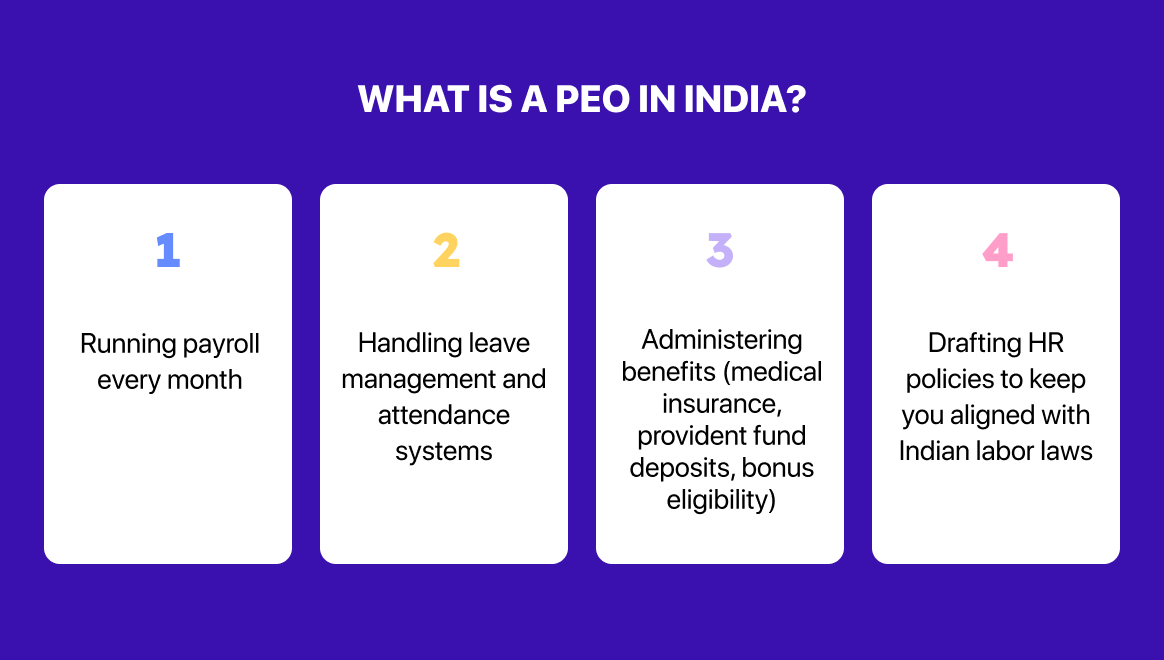
A PEO in India is your outsourced HR operations arm. It does not replace your company. It does not become the legal employer. It does not remove legal risk. It helps you avoid stepping on landmines you did not know were in the field.
Here’s what it really does for Indian small businesses.
1. Payroll Processing That Actually Matches Indian Law
PEO payroll covers:
- calculating gross-to-net
- applying TDS correctly (with real-time slab adjustments)
- PF and ESI deductions
- PF/ESI challan filing
- LWF + Professional Tax
- leave encashment
- arrears and bonuses
- Payslips that make sense in India
And the big part. Matching numbers across all portals so nothing triggers a mismatch flag.
2. Compliance You Can Show to a Labour Inspector
A PEO manages:
- PF registration and monthly filings
- ESI registration and monthly filings
- payment challans
- Shops & Establishments compliance
- statutory registers
- statutory forms for onboarding and exits
India’s labour officers expect perfect paperwork. A PEO provides it.
3. HR Administration That Removes Daily Headaches
This includes:
- employee onboarding
- offer letters & appointment letters
- Leave and attendance management
- policy setup
- documentation storage
- support for employee queries
This is the stuff founders underestimate until it eats half their week.
4. CTC Structuring & Benefits Administration
CTC in India is a puzzle:
- Basic
- HRA
- Special Allowance
- LTA
- Bonus
- Reimbursements
- PF
- Gratuity
A PEO knows how to structure pay legally and tax efficiently.
5. Risk Reduction on the Everyday Stuff
Terminations in India require:
- documented performance
- correct notice calculations
- prepared settlement sheets
- statutory payments
A PEO ensures you do not accidentally violate labour law.
How PEO Payroll Works in India (The Version That Actually Reflects Reality)
Payroll is not just a calculation. In India, it is a compliance theatre performed monthly, across four to six systems.
Here is how it actually works.
TDS (Tax Deducted at Source)
TDS depends on:
- income slab
- investment declarations
- variable pay
- mid-year salary changes
PEOs handle:
- Monthly tax calculation
- issuing Form 16
- filing through the Income Tax portal
- responding to mismatches
PF (Provident Fund)
Employee: 12%
Employer: 12%
Based on Basic (unless voluntary PF increases it).
PEOs:
- Calculate the correct wage components
- Manage EPFO contributions
- Handle UAN activation
- Ensure challans match declarations
- File monthly ECR
PF is the most common audit trigger. A PEO eliminates the guesswork.
ESI (Employee State Insurance)
ESI applies if salary ≤ INR 21,000.
Employee: 0.75%
Employer: 3.25%
PEOs handle:
- registrations
- monthly ESIC filings
- contribution reconciliation
- Benefit eligibility checks
Professional Tax (PT)
Varies by state:
- Maharashtra has slabs
- Karnataka monthly fixed amount
- Telangana fixed + categories
A PEO ensures the right PT is applied for each employee’s location.
Labour Welfare Fund (LWF)
Small contribution, big penalties if missed.
Again, varies by state.
Digital Filings (The Real Pain Point)
A PEO submits:
- PF ECR
- ESIC contributions
- TDS returns
- Form 24Q
- labour compliances via Shram Suvidha
If you misalign one number, the system sends a notice. A PEO shields you from this chaos.
The Rule No One Mentions: You Need an Indian Entity to Use a PEO
A PEO requires your business to already have:
- A registered Indian company
- PF/ESI registrations
- Shops & Establishments registration
- local statutory obligations
A PEO cannot be your legal employer.
A PEO cannot hire employees for you.
A PEO cannot shield you from employer liability.
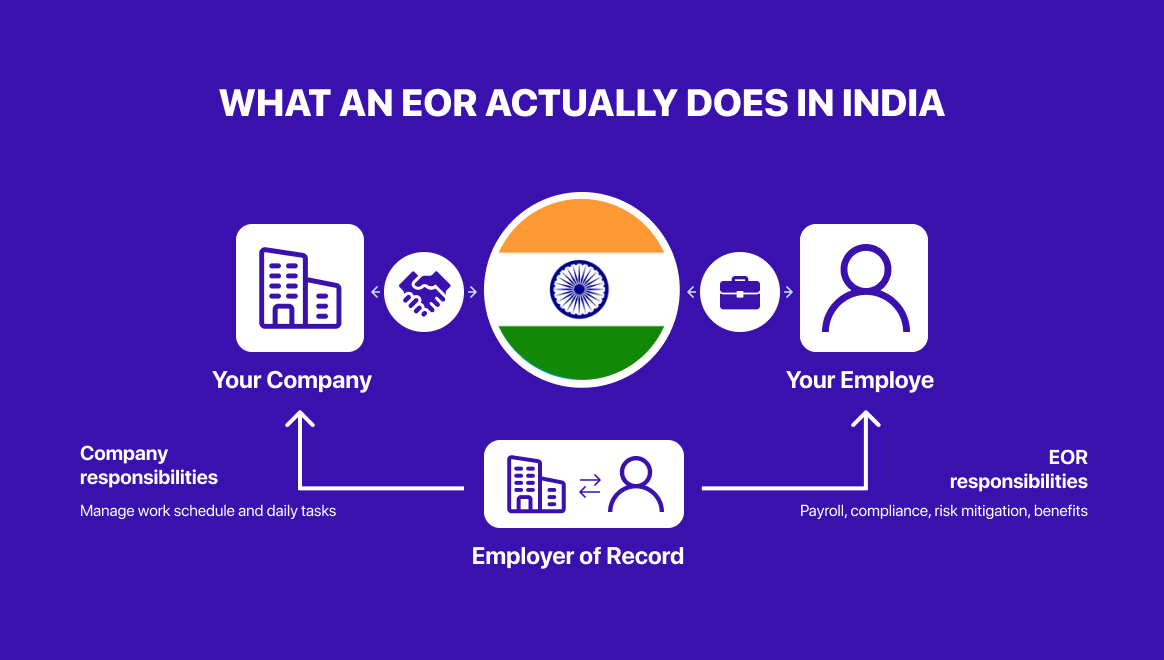
If you do not have an entity, you need an Employer of Record (EOR).
That is the model Team Up provides across India.
PEO vs EOR in India: Which One Fits Your Plan?

Let’s make this painfully clear.
Use a PEO if:
- You already have an entity
- Payroll is becoming unmanageable.
- HR documentation is messy.
- You want state-specific compliance handled for you.
- Your team is 8–30 employees and growing.
Use an EOR if:
- You do not have an Indian entity
- You want to hire fast.
- You want zero employer liability.
- You want predictable monthly costs.
- You are testing the Indian market before incorporating.
EOR = speed + safety.
PEO = operational support once you already exist legally.
PEO Pricing in India: PEPM vs Percentage of Payroll
India uses the same standard models as the rest of the world.
Per Employee Per Month (PEPM)
- predictable
- transparent
- favoured by global teams
Percentage of Payroll (2%–12%)
- fluctuates with salaries
- Often hides extra fees
- common with legacy HR firms
Pricing Drivers:
- PF/ESI complexity
- number of states involved
- contract amendments
- benefits administration
- support intensity
- number of employees
- statutory compliance load
Hidden PEO Costs in India That Do Not Show Up on the Sales Call
PEO pricing in India always sounds simple in the first conversation. It usually stops sounding simple once you see the contract and the first three invoices.
If you are a small business in India, here is where the costs tend to hide.
1. Onboarding and Implementation Fees
Many PEOs charge you just to start working with them.
That can look like:
- A one-time implementation fee
- per employee onboarding charges
- separate billing for migrating existing employees into their system
- Extra cost for setting up PF and ESI codes across locations
Questions to ask:
- “Do you charge an implementation fee for India, and how much is it?”
- “Is there a per-employee onboarding fee?”
- “Is the migration of our current employees included or billed separately?”
If they cannot answer in one clear sentence, you can assume surprises.
2. Off-Cycle Payroll and Correction Charges
In India, real life does not respect payroll cut-off dates.
You may need to:
- Process a joining mid-month
- Pay arrears or performance bonuses
- Correct a TDS miscalculation
- Handle a retrospective salary change
Some PEOs charge extra for:
- Any off-cycle run
- Revising PF or ESI challans
- correcting past payroll or filing errors
Ask:
- “Are off-cycle payroll runs included in your standard fee?”
- “If TDS or PF needs correction next month, is that part of the service or an extra charge?”
3. Portal and Notice Handling Fees
Indian compliance is portal-heavy.
EPFO, ESIC, Income Tax, and state systems. All of them can:
- generate notices
- Raise mismatch flags
- Require clarification or data fixes
Some PEOs treat notice responses and historical fixes as billable work, not part of the base service.
Ask:
- “If EPFO or ESIC sends us a notice related to filings you handled, who responds, and is that included?”
- “Do you charge extra to resolve portal mismatches for PF, ESI or TD?.”
You are not just buying payroll. You are buying their willingness to stand in front of the fire with you.
4. Markups on Benefits and Insurance
As Indian teams start expecting health insurance, accident cover, or wellness benefits, PEOs often act as the aggregator. That is useful. It also creates a perfect place to hide margin.
This can appear as:
- A higher per-employee premium than the underlying insurer charges
- “admin” lines that fold in benefits and margin together
- limited visibility into the base cost versus the service fee
Ask for clarity:
- “What is the insurer’s base premium per employee?”
- “How much of this monthly amount is your fee?”
- “Can we see a breakdown by component?”
If they resist, the margin is probably generous.
5. Multi-State Surcharges
India’s state-based labour system gives PEOs an excuse to add “complexity fees”.
You might see:
- Extra charges for every new state you expand into
- Added monthly fees for high-compliance states
- different pricing tiers for different state combinations
Ask:
- “Is there a fee per state or per registration?”
- “If we add employees in a new state, how does your pricing change?”
If your team is already spread across Bengaluru, Pune, Hyderabad and Gurgaon, you need that answer before you sign anything.
6. Document and Letter Charges
You will need:
- Employment letters for visa, banking and leases
- salary certificates
- experience letters
- PF and ESI summaries for employees leaving the company
Some PEOs include all of that. Others charge per document or bundle it in a “professional services” line.
Ask:
- “Are employment letters, salary certificates and experience letters included?”
- “Do you charge for ad hoc HR letters or custom documents?”
7. Termination and Legal Advisory Fees
Separations in India can be sensitive.
You might need:
- Structured performance documentation
- settlement sheets
- calculation of notice pay and statutory amounts
- Guidance on which law applies to which category of worker
PEOs may bill extra for:
- Complex termination cases
- legal consultation on disputes
- drafting custom separation agreements
Ask:
- “Is basic termination handling included in your model?”
- “Do you charge by the hour for labour or legal questions, or is that part of the service?”
When PEO Services in India Are a Smart Move for Small Businesses
Let us be fair. PEOs are not the villain here. Used in the right context, they are exactly what a growing Indian business needs.
Here is when a PEO genuinely makes sense.
1. You Already Have an Indian Entity, and It Is Staying
If you:
- Have an Indian private limited or LLP
- Already hold PF and ESI registrations
- Intend to keep that entity long term
Then a PEO is a logical way to stabilise HR and payroll without building a whole HR department.
If you plan to exit the entity soon or are not sure you want to stay in India, EOR is a cleaner structure than PEO.
2. Your Payroll Has Outgrown Spreadsheets
You know PEO is on the table when:
- Payroll is being run from Excel, and one person holds all the logic in their head
- TDS calculations change mid-year, and no one is entirely sure why
- PF and ESI challans are filed in a rush.
- Different states are being handled with quick fixes instead of clear rules.
With 10–30 employees across multiple cities, “DIY payroll” is not lean. It is dangerous.
A good PEO gives you:
- Stable monthly payroll
- Consistent treatment of CTC across employees
- Clean, reconciled PF and ESI filings
- Documentation that can survive due diligence or inspection
3. You Are Multi-State and Tired of Keeping Track
If you have employees in more than one of these:
- Karnataka
- Maharashtra
- Telangana
- Delhi NCR
- Tamil Nadu
- West Bengal
Then your compliance matrix is already more complex than most founders want to admit.
A PEO that understands multi-state India can:
- Maintain separate state-wise registers
- Manage PT, LWF and Shops & Establishments rules per location.
- Keep you off the radar of state inspectors.
4. You Cannot Justify a Full HR and Compliance Team Yet
To do HR and payroll well in India, you would need:
- An HR manager
- A payroll or accounts person who knows PF, ESI and TDS
- External counsel or consultants for grey areas
A PEO gives you that operational capability, without multiple full-time hires on the payroll.
5. You Want Your Team to Stop Asking Basic HR Questions
There is also the human side.
A PEO typically gives:
- An employee help desk
- Clarity on payslips and deductions
- Clear leave and holiday rules
- Structured onboarding and offboarding
That saves founders from being the unofficial HR chatbot through WhatsApp.
When PEO Services Become a Liability in India
There are also cases where PEO is exactly the wrong choice. In those situations, forcing PEO into your strategy does more harm than good.
1. You Do Not Have an Indian Entity
This is non-negotiable.
No Indian entity means:
- You cannot enter a co-employment structure
- You cannot be the legal employer.
- A PEO has nothing to “support”
Any provider claiming to offer “PEO in India” without your own entity is either misusing language or inviting you into a non-compliant setup.
If you want to hire without creating a company, you need an Employer of Record in India, not a PEO. That is exactly what Team Up offers.
2. Your Team Is Tiny, and You Are Testing the Market
If you are hiring:
- One or two developers in Bengaluru
- a country manager in Mumbai
- a small customer support pod in Hyderabad
And you are still in testing mode; a full PEO layer is often overkill.
In that stage, EOR services in India are usually:
- Cheaper overall
- Faster to start
- Easier to unwind if the experiment does not work
- Lighter on internal process overhead
3. You Need to Move Quickly
PEO assumes you already have:
- An incorporated entity
- Bank account
- PF and ESI registrations
- PAN, TAN and all the basics
If you are still in the middle of incorporation and registration, a PEO cannot speed anything up. It can only wait.
An EOR provider lets you:
- Hire in days instead of months
- Test roles and markets while your internal legal and finance teams figure out whether an entity even makes sense
- Avoid rushing through a half-baked company setup just to issue an offer letter.
4. You Want to Minimise Legal Exposure in India
Under a PEO model:
- Contracts are between your entity and the employee
- You are directly on the hook for labour and tax compliance.
- You are the party inspectors and authorities deal with
A PEO reduces operational risk but does not carry the legal risk for you.
If your board or investors care deeply about limiting local exposure, you want a structure where:
- The EOR is the legal employer
- Local employment contracts sit with them.
- Filings and compliance sit under their name.
That is EOR territory.
5. You Are Expanding Across Multiple Countries
If India is just one part of your expansion story, and you are also hiring in places like Georgia, Armenia or other markets, you end up juggling:
- Separate entities
- Multiple PEOs
- Different contracts
- Different processes per country
That is a recipe for complexity.
A regional EOR approach gives you:
- One agreement
- One operating model
- A single way to think about risk and compliance
India plugs into that more cleanly than into a patchwork of PEO relationships.
How to Choose a PEO in India Without Regretting It Later
If, after all of this, PEO still fits your situation, the next challenge is picking the right one. A weak PEO is worse than no PEO.
Here is how to evaluate PEO providers in India like an adult, not a lead in their pipeline.
1. Test Their Knowledge of Indian Compliance, Not Their Sales Pitch
Ask questions they cannot fake.
For example:
- “Walk me through payroll for a full year for a team member in Bengaluru. Include TDS, PF, ESI and PT.”
- “How do you handle a salary revision mid-year when TDS slabs shift?”
- “What happens on your side when an EPFO or ESIC notice arrives?”
You want specifics, not vague reassurance.
2. Demand Clean, Written Pricing
Ask for:
- Clear PEPM or percentage of payroll model
- Written inclusions
- Written exclusions
- Visibility into any minimum monthly fees
- Notice period and contract duration
If you cannot explain their pricing to your CFO on one page, do not sign it.
3. Look at Their Tools, Not Just Their Logo Sheet
Ask to see:
- The employee self-service portal
- How pay slips look
- How managers approve leave or changes
- What kind of reports can finance export?
If their stack feels clunky, your team will complain. You are buying user experience as much as compliance.
4. Stress Test Their Support Before You Sign
Before you commit, send them a few realistic use cases.
For example:
- An employee moving from one state to another
- A termination after underperformance
- A maternity leave case with PF and ESI questions
Check:
- How fast they respond
- How detailed they are
- ჭhether they reference actual Indian rules or stay abstract
You are not buying a website. You are buying a brain and a response time.
5. Clarify Who Owns Mistakes
Ask straight:
- “If a PF or TDS filing you manage leads to a penalty, who pays it?”
- “Do you have professional liability insurance for your work?”
- “Will you fix historical filings at your cost if the error is on your side?”
Get that in writing, not just on a call.
6. Check Their Track Record in India
Look for:
- Clients of similar size and structure
- Experience with multi-state presence
- Ability to share anonymised case examples
You do not want to be their first real India client.
Final Guidance. PEO vs EOR in India and Where Team Up Actually Fits
Here is the honest version.
A PEO in India is a strong move if:
- You already have an Indian entity and plan to keep it
- Your headcount is growing fast enough that payroll and compliance are heavy burdens.
- Your team is spread across multiple states.
- You want reliable HR operations, but are comfortable keeping legal employer status and risk.
A PEO becomes a problem when:
- You do not have an entity
- Your team is small and experimental.
- You want to move fast.
- You want to limit legal exposure.
- You are hiring across more than one country.
In those cases, you do not need a PEO. You need an Employer of Record.
That is what Team Up brings to the table.
With Team Up as your EOR partner, you can:
- Hire employees in India without forming an entity
- Issue fully compliant Indian employment contracts held by Team Up
- Run payroll with PF, ESI, TDS, PT and LWF handled correctly under our name.
- Get clean, consolidated invoices instead of a pile of line items
- Plug India into the same model you use for the Caucasus and other markets.
You keep control of the work, culture and outcomes. We carry the legal and compliance weight.
If you care more about building a serious team in India than learning every detail of PF, ESI and TDS, PEO is not the tool you start with. EOR is. And that is exactly the part of the problem Team Up is built to own.
FAQ
1. What are PEO services for small businesses in India?
PEO services for small businesses in India provide outsourced HR, payroll, and compliance support. The PEO manages PF, ESI, TDS, Professional Tax, contracts, onboarding, and statutory filings while your company remains the legal employer.
2. How does a PEO work in India?
A PEO in India handles payroll processing, employment documentation, PF/ESI filings, leave management, compliance monitoring, and employee support. You continue managing day-to-day work, but the PEO ensures all statutory requirements are met across states.
3. Do I need an Indian legal entity to use PEO services?
Yes. A PEO model requires your company to already have an Indian entity. Without a registered entity, you cannot use a PEO. If you want to hire in India without creating a company, you must use an Employer of Record (EOR).
4. What is the difference between a PEO and an Employer of Record in India?
A PEO supports HR and payroll operations but does not become the legal employer. An Employer of Record becomes the official employer in India, issues compliant contracts, pays PF/ESI, files taxes, and allows foreign companies to hire without forming an Indian entity.
5. How does PEO payroll work in India?
PEO payroll includes monthly TDS calculation, PF and ESI deductions, Professional Tax, Labour Welfare Fund, leave encashment, bonus payouts, payslip generation, challan submission, and digital reporting through EPFO, ESIC, and Income Tax portals.
6. Is PEO better than EOR for hiring remote employees in India?
If your business already operates an Indian legal entity, a PEO can simplify HR and payroll. If you do not have an entity, EOR is the only compliant way to hire remote workers in India. A PEO cannot legally employ workers on your behalf.
7. Are PEO services cost-effective for small companies in India?
PEO services can be cost-effective for growing teams that already have an Indian entity and need structured payroll and compliance support. For very small teams or companies testing the Indian market, EOR is usually more affordable and operationally simpler.
8. What hidden costs should businesses expect with PEO providers in India?
Hidden costs may include onboarding fees, off-cycle payroll charges, PF/ESI correction fees, multi-state surcharges, benefits markups, HR document fees, termination support charges, and additional billing for legal advice or inspections.
9. Can a PEO legally employ workers for a foreign company in India?
No. A PEO cannot legally act as the employer for a foreign company without a local entity. Only an Employer of Record can serve as the legal employer for foreign businesses hiring talent in India.
10. How do I choose the best PEO service provider in India?
Choose a PEO with strong Indian compliance expertise, transparent pricing, reliable support, modern HR tools, multi-state experience, and a clear policy for handling PF/ESI filings, TDS, notices, and statutory documentation.
.svg)